
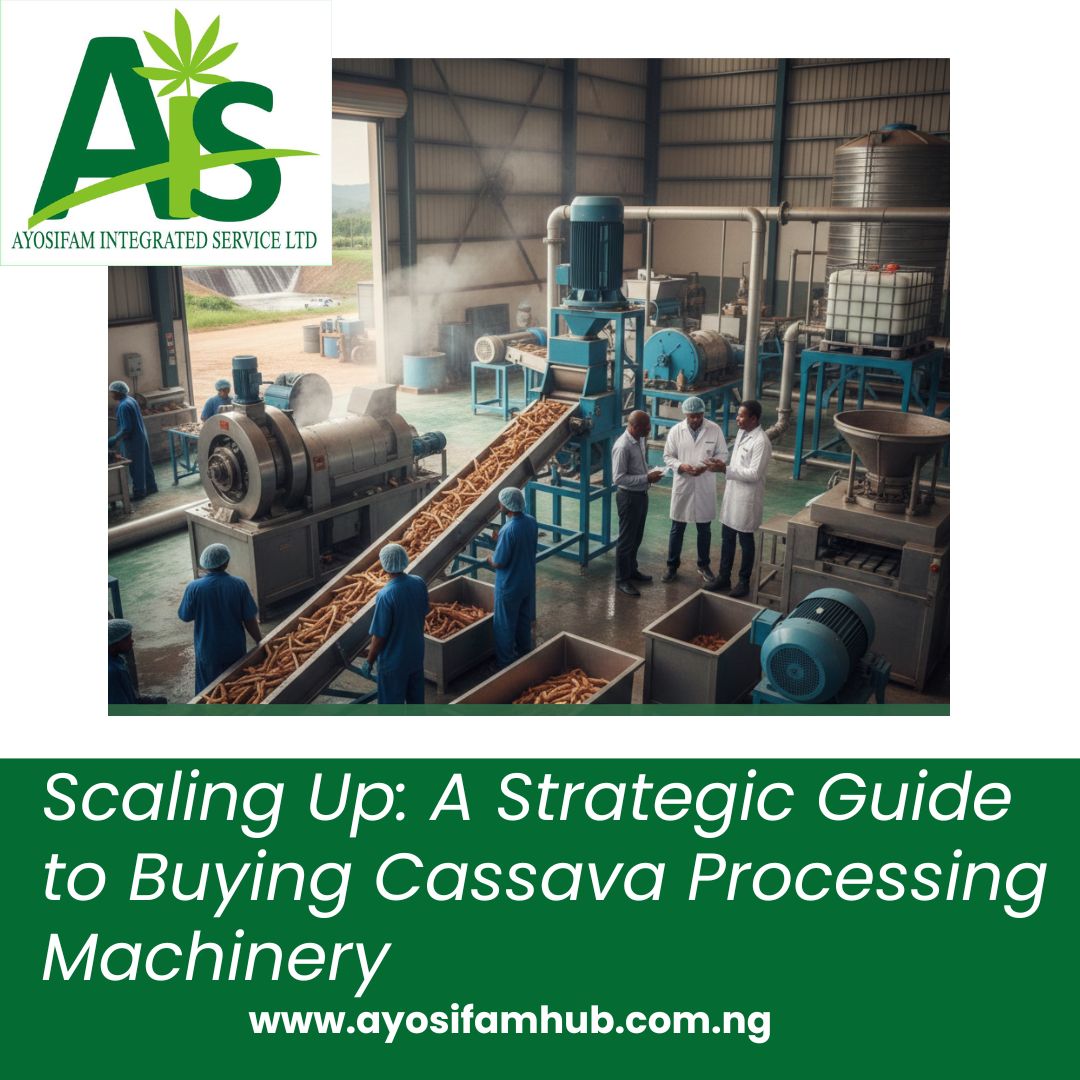
Cassava is often called the “gold of the soil” in West Africa, and for good reason. As the world’s largest producer of cassava, Nigeria sits on a massive opportunity for job creation and industrial growth. However, moving from subsistence farming to a profitable industrial setup requires more than just land—it requires the right machinery.
At AyosifamHub, we believe that the right information is the first step toward agricultural success. Whether you are looking to dominate the export market or serve local demand for Garri and HQCF (High-Quality Cassava Flour), your choice of equipment will determine your longevity in the business.
Here is a guide on how to navigate the machinery market, from the shores of Thailand to the workshops of Nigeria.
1. Where to Buy: Thailand vs. Nigeria
The “where” depends largely on your capital and the scale of your vision.
-
Thailand: The Industrial Standard
If you really want to do business in the cassava industry at a massive scale—providing hundreds of jobs and targeting global starch markets—then you go to Thailand. They are the world leaders in high-efficiency, fully automated processing lines.
-
The Investment: It requires significant capital, but the output quality and speed are unmatched.
-
-
Nigeria: The Local Advantage
If you have less capital, you can find reliable machines right here in Nigeria. Local fabricators have made huge strides, especially with cassava peelers and graters.
-
The Investment: These are more affordable, easier to maintain locally, and perfect for small-to-medium enterprises (SMEs) looking to make an immediate impact in their community.
-
2. The Non-Negotiable: Water Availability
Before you pay a single Naira for a machine, AyosifamHub advises all processors to look at their water source. Cassava processing is “thirsty” work. Washing and peeling require a continuous, high-volume supply of clean water.
-
Farm Location: Ensure your location has a surplus water supply.
-
Infrastructure: This means either having access to a dam or investing in a deeper borehole with a high-yield water level. Without a steady flow of water, your machines will be idle, and your final product quality will suffer.
3. Smart Buying: Verification and Guarantees
Never buy a processing machine based solely on a catalogue or a phone call. These machines are the heart of your business; you must treat the purchase with “physical” seriousness.
-
Physical Verification: Always go for a physical visit to the supplier. See the machines with your own eyes before any money changes hands.
-
One-on-One Talk: Have a direct conversation with the suppliers. Tell them exactly what you intend to do. Whether you are producing flour, chips, or garri, the supplier needs to know your specific needs to give you the right configuration.
-
Ensure Guarantees: Don’t just take their word for it. Ensure you get written guarantees for the machines. A machine that breaks down in the first month without a warranty is a liability, not an asset.
Final Thoughts
Investing in cassava processing is a powerful way to provide jobs and strengthen the agricultural value chain. By choosing the right machinery—whether imported or locally fabricated—and securing your water supply, you are building a foundation that can last for generations.
For more insights into agricultural business and farm management, stay tuned to AyosifamHub.
Would you like us to create a technical checklist of parts you should inspect during your “physical verification” visit to a supplier?


