
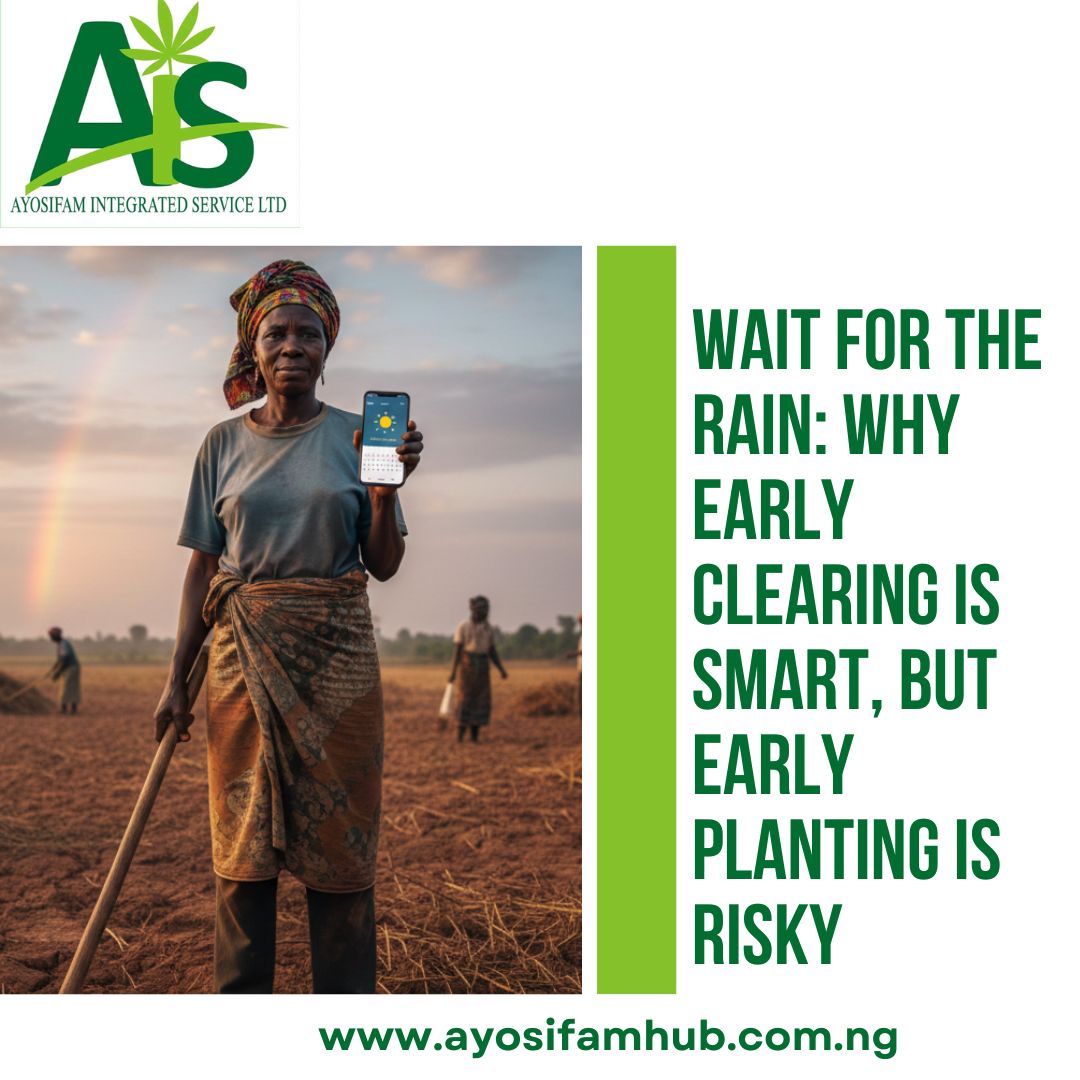
As we move into the first quarter of 2026, many of our farmers are looking at the sky with one question: “Where is the rain?” Across many regions, we are seeing a “false start”—scattered showers that disappear as quickly as they arrive, leaving the ground hot and thirsty. While it’s tempting to start planting at the first sign of moisture, doing so too early could be a costly mistake.
Why the Rain is Hiding: The 2026 Climate Shift
The current shortage of rainfall isn’t just “bad luck.” Several factors are at play:
-
The Transition Phase: We are currently seeing a shift in global weather patterns (moving from a weakening La Niña toward neutral conditions). This often causes “patchy” rain—it rains on one farm but leaves the neighbours’ field dry.
-
Delayed Harmattan Effects: In many parts of West Africa, the dry Saharan winds lasted longer than usual, pushing back the arrival of the moist air masses that bring consistent rainfall.
-
Rising Temperatures: Ground temperatures are currently higher than the 10-year average. This means that even when it does rain, the water evaporates from the soil before seeds can fully drink it up.
The “False Start” Trap
Many farmers see the first heavy rain and rush to plant. This is known as a False Start.
The Danger: If you plant now and the rain stops for two weeks (a “dry spell”), your seeds will germinate, find no water, and wither. You lose your investment in seeds, fertilizer, and labour, forcing you to buy everything all over again when the real rains come.
What You Should Do Now: “Prepare, Don’t Plant”
Just because the rain isn’t ready doesn’t mean you should be idle. This is the perfect time for Land Preparation.
-
Continue Clearing: Clear your bushes and remove weeds. Removing competing vegetation now ensures that when the rain finally arrives, every drop of water goes straight to your crops.
-
Land Mapping & Tilling: Use this dry window to map your rows and till the soil. Tilling dry soil is often easier and prevents the “compaction” that happens when you work on waterlogged land.
-
Source Quality Inputs: Use this time to secure high-quality, drought-resistant seeds from trusted sources.
-
Mulching: If you have cleared grass or organic waste, spread it over your soil. This acts as a “blanket,” keeping the soil cool and ready to hold moisture the moment the rains establish.
The Golden Rule for 2026
Do not plant until the rain has fallen consistently (at least 3-4 times a week) for two consecutive weeks, or until your local agricultural extension officer confirms the “onset” of the season.
Patience today is the secret to a bumper harvest tomorrow.


