
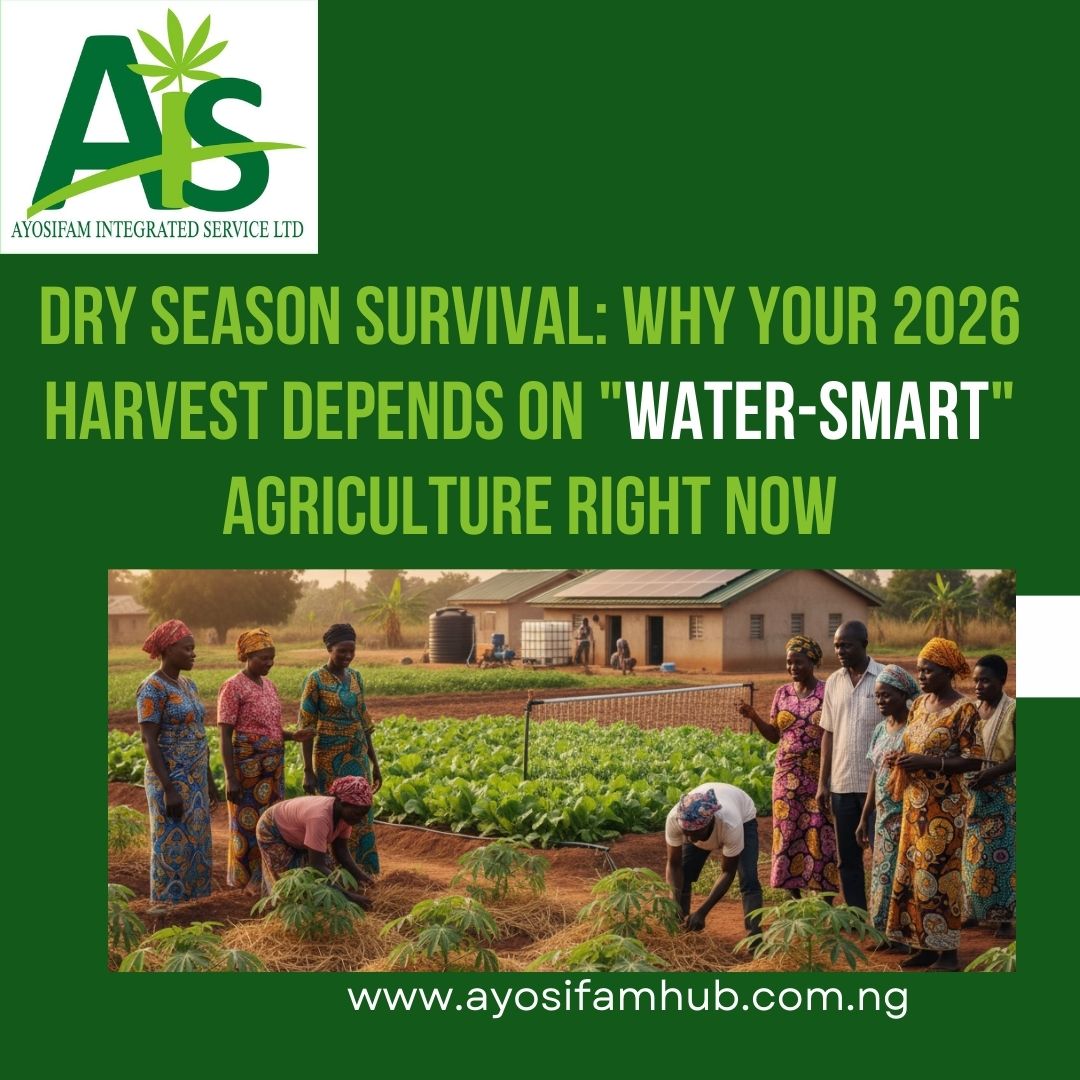
As we move deeper into February, the familiar signs of the dry season are all around us: parched earth, intense sun, and the constant worry about water. For smallholder cassava and potato farmers across Nigeria, this period isn’t just a challenge; it’s a make-or-break moment for your 2026 harvest.
At AyosifamHub, we understand that while big investments like the N800bn for agro-processing are exciting (and we’ll keep talking about them!), the immediate concern for many of you is simply keeping your crops alive and thriving through these harsh conditions.
This isn’t just about finding water; it’s about being “Water-Smart.”
The Dry Season Threat: More Than Just Thirst
The dry season doesn’t just deprive your crops of water; it intensifies other challenges:
-
Heat Stress: High temperatures can halt growth, damage leaves, and even scorch tubers in the soil.
-
Nutrient Lock-up: Dry soil makes it harder for plants to absorb essential nutrients, even if they are present.
-
Pest Infestations: Some pests, like spider mites, thrive in dry, dusty conditions and can quickly decimate stressed plants.
-
Yield Reduction: Ultimately, prolonged water stress directly translates to significantly lower yields and poor quality crops.
Becoming “Water-Smart”: Key Strategies for Cassava & Potato Farmers
Here are practical, implementable strategies to help your cassava and potato fields weather the dry season and secure a stronger harvest:
1. Master the Art of Mulching
This is perhaps the most effective and accessible dry-season strategy.
-
What it is: Covering the soil around your plants with a layer of organic material like dried grass, crop residues (cassava stems, potato haulms), wood chips, or even black plastic sheeting.
-
How it helps:
-
Retains Moisture: Mulch acts like a blanket, reducing evaporation from the soil surface by up to 70%!
-
Regulates Soil Temperature: Keeps the soil cooler in the day and warmer at night, protecting delicate roots.
-
Suppresses Weeds: Reduces competition for precious water and nutrients.
-
Adds Nutrients: Organic mulches decompose over time, enriching your soil.
Ayosifam Tip: For potatoes, a thick layer of straw or dried grass around the base of the plants once they’ve emerged works wonders. For cassava, ensure the soil around the base of the stem is well-mulched.
-
2. Embrace Drought-Resistant Varieties
Technology is on your side! Research institutions like the International Institute of Tropical Agriculture (IITA) have developed cassava and potato varieties specifically bred to tolerate dry conditions.
-
Cassava: Look for improved varieties known for their drought tolerance. These often have deeper root systems that can access water further down in the soil profile.
-
Potatoes: While generally more water-intensive, some potato varieties show better resilience to short periods of drought. Consult your local agricultural extension officer for recommendations specific to your region.
Ayosifam Insight: The recent $200 million AfDB loan to Nigeria for special agricultural processing zones includes a focus on enhancing climate-resilient farming, which means better access to these improved varieties will become more widespread. Stay tuned to AyosifamHub for updates on how to access them!
3. Smart Irrigation (If You Have Access)
If you have any form of irrigation—be it a borehole, well, or even manual watering—make every drop count.
-
Timing is Key: Water early in the morning or late in the evening to minimize evaporation.
-
Deep, Infrequent Watering: It’s better to water deeply and less frequently than lightly every day. This encourages roots to grow deeper, making plants more resilient.
-
Targeted Watering: Use watering cans or drip irrigation (even makeshift ones) to deliver water directly to the plant’s root zone, rather than broad-spray methods that waste water.
4. Soil Health is Foundation Health
Healthy soil with high organic matter content acts like a sponge, holding more water for longer.
-
Composting: Incorporate compost into your soil before planting.
-
Crop Rotation: Practice good crop rotation to maintain soil structure and fertility.
Looking Ahead: The Bigger Picture
While these immediate strategies are vital, the government’s renewed focus on renewable energy (N300bn), as part of the new industrial policy, offers a long-term solution to dry season challenges. We envision a future where:
-
Solar-powered boreholes provide reliable water for irrigation in remote farming communities.
-
Mini-grids electrify rural areas, enabling more efficient water pumping and even localized processing that reduces post-harvest losses.
This dry season, don’t just hope for rain. Implement these water-smart strategies. Your dedication now will be rewarded with a more resilient and bountiful harvest.
What dry season challenges are you facing right now? Share your tips and questions in the comments below!
#AyosifamHub #DrySeasonFarming #WaterSmartAgriculture #CassavaFarming #PotatoFarming #NigerianAgriculture #ClimateResilientFarming


