In the commercial food processing sector, quality is often judged by what you can see: the color of the flour, the texture of the product, or the professionalism of the packaging. But at Ayosifam Integrated Service Limited, we know that the true indicator of premium food safety is completely invisible to the naked eye.
It comes down to a single ingredient that many processors take for granted: Water.
Whether processing cassava into our signature Odourless Cassava Fufu Flour or converting grains and tubers into staple flours, water is the lifeblood of the washing, fermentation, and milling stages. Yet, across the West African agricultural mid-stream, water quality remains the most overlooked vulnerability.
Today, we are taking you behind the scenes of our facility in Kwara State to show exactly how our investment in a 100-meter deep industrial borehole changes the game for food safety, shelf-life, and compliance.
The Hidden Danger: Shallow Wells vs. Deep Aquifers
Many regional processors rely on surface water, local streams, or shallow hand-dug wells (typically 10 to 30 meters deep). While this water may look clear to the human eye, shallow water tables are highly susceptible to:
-
Microbial Contamination: Surface runoff carries bacteria like E. coli and Salmonella from nearby livestock or topsoil directly into shallow wells.
-
Chemical Runoff: Fertilizers, pesticides, and heavy metals easily leach into upper soil layers, contaminating the water used to wash food.
-
Fungal Spores: Contaminated water introduces mold spores early into the processing cycle, which accelerates spoilage once the flour is packaged.
When a commercial buyer or retail chain stocks these products, they run a massive risk of premature spoilage, batch recalls, and regulatory sanctions.
The Ayosifam Standard: Pharmaceutical-Grade Isolation
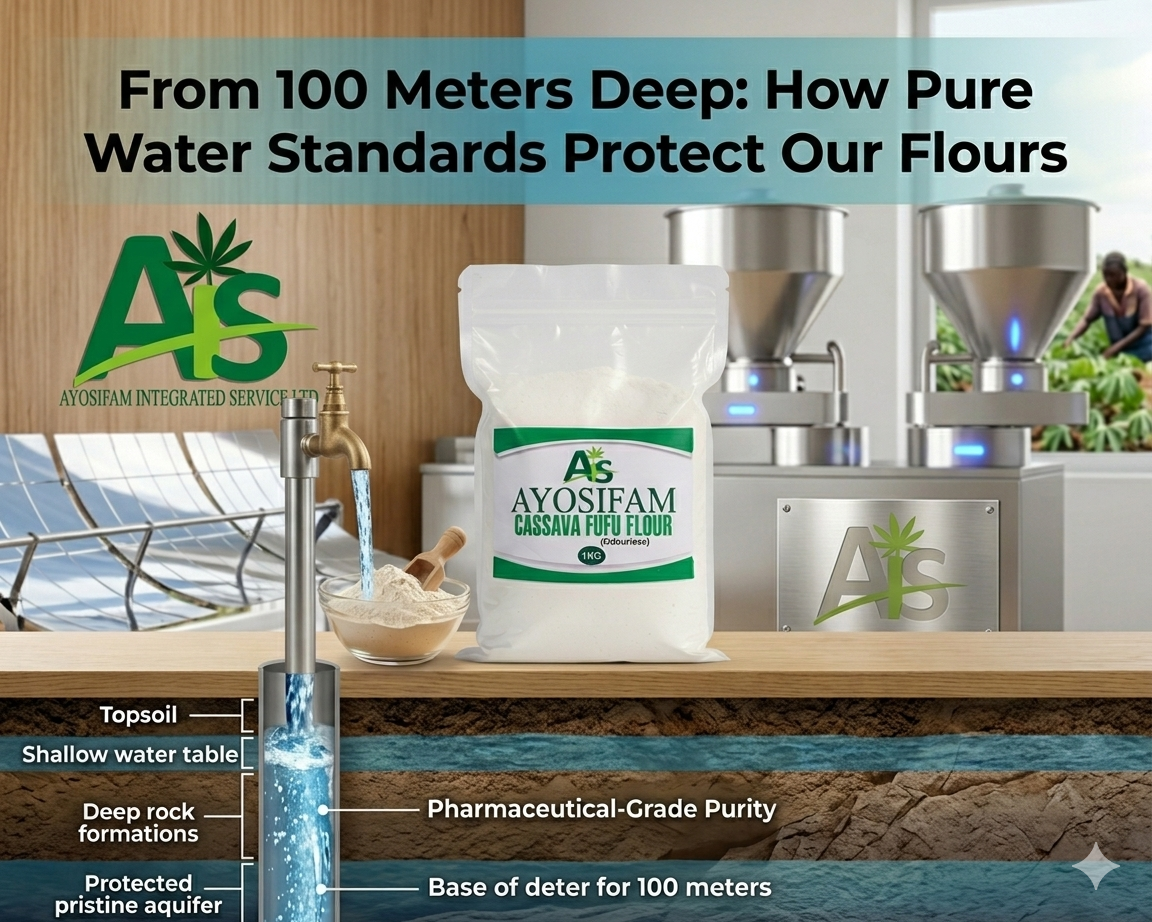
To eliminate this risk entirely, we drilled down 100 meters into the earth to tap into a pristine, undisturbed deep-rock aquifer.
By bypassing the vulnerable upper layers of the water table, our facility draws water that has been naturally filtered through layers of rock for decades. This clinical-grade water ensures three distinct operational advantages:
1. Absolute Odour and Taste Control
Traditional fufu often carries a sharp, pungent smell that turns modern consumers away. This is frequently caused by irregular fermentation driven by wild, unmonitored bacteria present in local water sources. By using microbiologically pure water from our deep borehole, our fermentation process is strictly controlled, resulting in a truly odourless flour that retains its traditional texture without the unpleasant scent.
2. Extended Shelf Life Without Preservatives
Because our washing process introduces zero microbial or fungal contaminants to the raw cassava pulp, our flour starts its drying phase completely clean. When combined with our sealed parabolic solar dryers, the moisture is stripped away without exposing the product to dust or airborne spores. The result? A naturally shelf-stable product that doesn’t rely on chemical preservatives to survive on a supermarket shelf for months.
3. Bulletproof NAFDAC Compliance
For major distributors and corporate retailers, regulatory compliance is non-negotiable. Regulatory bodies like NAFDAC look closely at microbial loads during inspections. Our investment in premium water infrastructure guarantees that every batch of Ayosifam flour comfortably meets and exceeds national food safety metrics, giving our B2B partners complete peace of mind.
A Moat Built on Infrastructure
We believe that building a resilient food system in Nigeria requires moving past shortcuts. True industrial scaling cannot happen on the backs of artisanal, unhygienic methods.
By securing a pure, reliable water supply and pairing it with climate-smart solar dehydration, Ayosifam isn’t just processing staples—we are engineering a standard of purity that protects your consumers, safeguards your retail brand, and elevates Nigerian agribusiness to a global standard.
Secure Your Supply Chain with Certified Quality


