
With food inflation squeezing markets across the country, a major lifeline was recently thrown to the agricultural sector. The Bank of Agriculture (BOA) announced a massive rollout of single-digit, low-interest loans and tractorization programs designed to empower smallholder farmers and boost national food security.
For the average smallholder, a single-digit loan sounds like a dream come true. It is the capital injection many have been praying for to expand their fields, buy fertilizers, and scale up production.
But before you rush to apply, we need to have an honest conversation about a critical truth: A loan is a multiplier. If you multiply a bad farming strategy, you only get a bigger debt.
The Capital Trap: Why Money Alone Won’t Save a Farm
Too often, farmers believe that a lack of money is the only thing standing between them and prosperity. But as we always emphasize at Ayosifam, capital is only effective if your agricultural foundation is solid.
Imagine securing a million-Naira loan from the BOA, only to spend it on clearing five hectares of land planted with degraded, low-yielding cassava stems on exhausted, untested soil. As we noted recently, a few rows of premium, high-yielding cassava should comfortably fill a truck. If your seeds are poor, cultivating more acres just means you are burning through your loan faster on extra labor, weeding, and tractor hiring—with absolutely no guarantee of a return.
When harvest time comes and the yield is low, the market won’t care how much you spent. The loan will still need to be paid back, leaving you in a worse financial position than when you started.
How to Access the BOA Support Wisely
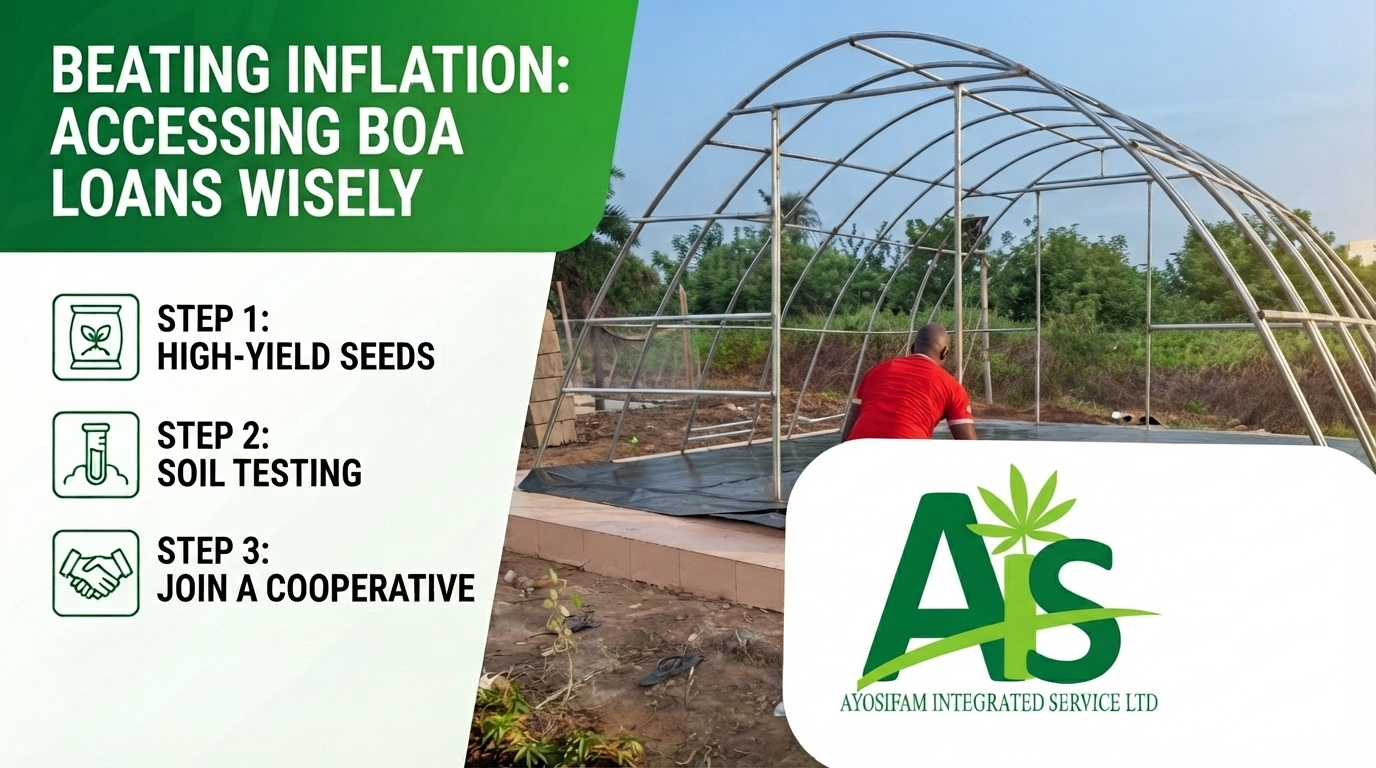
To ensure this new intervention brings you prosperity rather than debt, here is a strategic checklist every smallholder must follow before chasing funding:
-
Invest in the Seed First: Do not seek a loan to fund a large farm of low-quality crops. Use your available resources to secure certified, disease-resistant, high-yielding planting materials.
-
Conduct a Soil Test: Know what your soil needs before blindly buying bags of fertilizer with borrowed money. Smart farming relies on precise data, not guesswork.
-
Organize into Cooperatives: Institutional lenders like the BOA rarely hand out loans to unverified individuals. Formalizing your farm, keeping clean transaction records, and joining trusted cooperative networks makes your agribusiness completely bankable and structured for investment.


