
The dry season brings unique challenges to smallholder farmers, and protecting your valuable cassava crops from grazing livestock, especially cattle, becomes a top priority. A single herd can wipe out months of hard work in hours. Ayosifamhub is here to provide you with practical, farm-tested solutions!
Here are some highly effective, practical steps you can take right now to secure your cassava farm and ensure a successful harvest, featuring a clever, community-friendly technique and traditional methods.
1. The Power of the Pictured Signpost (The 70% Solution)
One of the most innovative and effective ways to deter wandering cattle is by communicating clearly and visually to herders before they even approach your farm. This method is highly recommended by Ayosifamhub for its social and visual effectiveness.
-
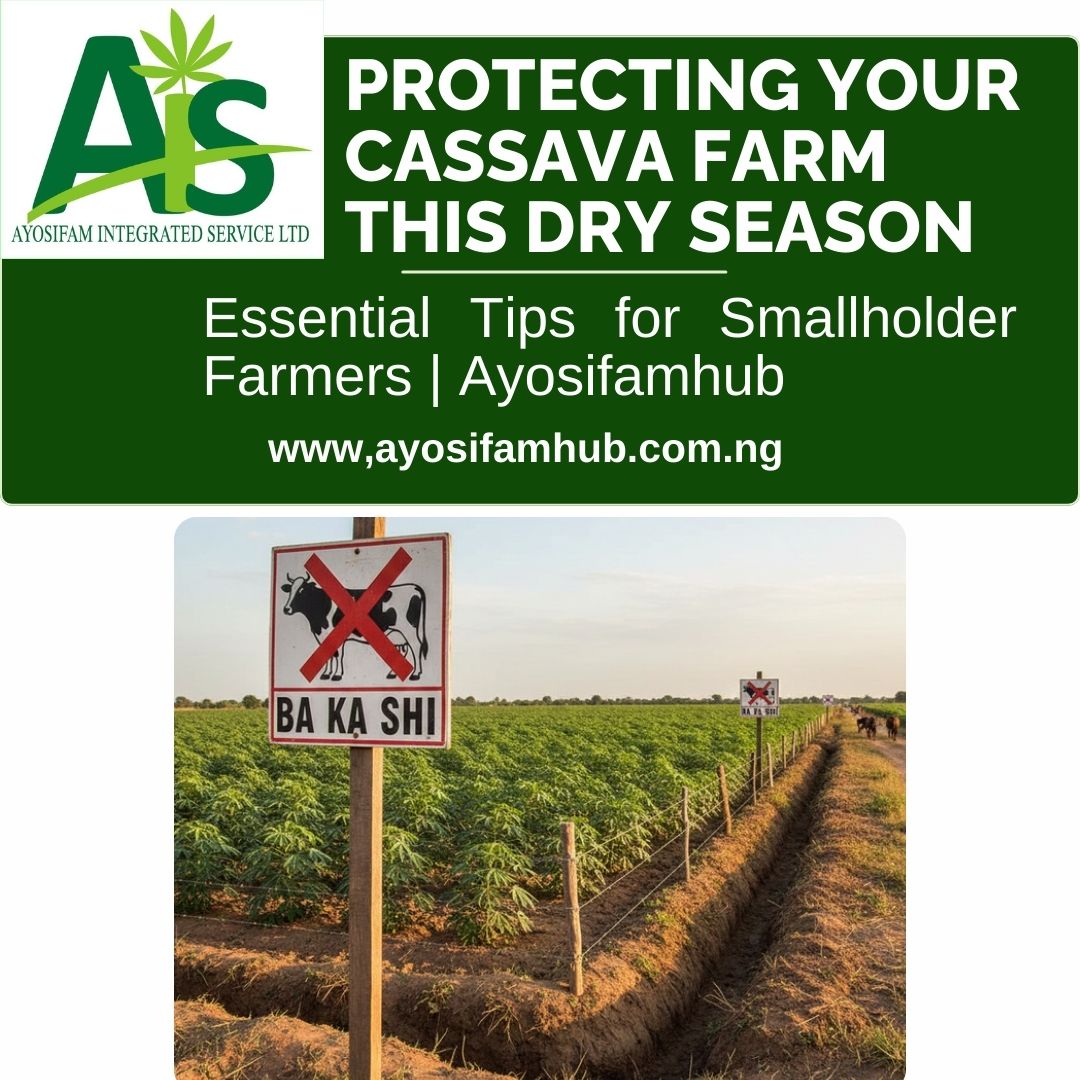
Design & Message: Erect a signpost featuring a large, clear picture of a cow with a prominent red cross or slash over it (similar to a ‘No Parking’ sign).
-
The Caption: Under the image, write the message in Hausa (a language widely understood by many herding communities): “BA KA SHI.”
-
Translation: This literally means “You don’t enter” or “It is not allowed here.” This simple, direct communication is often more respected than a generic ‘Keep Off’ sign.
-
-
Strategic Placement:
-
The Early Warning: Place the first sign at least 1 kilometer (1,000 meters) before the start of your actual farm area, along the likely path of herders. This gives them ample time to divert their route.
-
Perimeter Reinforcement: Erect additional signs at key entry points and visible locations around the farm area itself. The repeated visual message reinforces the boundary.
-
? Why This Works: Many herders are literate in either Hausa or the visual language of signs. Seeing a clear “Cow Not Allowed” sign well in advance allows them to avoid confrontation and guides them away, providing a claimed 70% security boost for your crops.
2. Maintain a Clean, Weed-Free Farm
While it may seem basic, maintaining a clean farm is a critical security measure during the dry season.
-
Remove Attractants: Weeds and volunteer crops are often the first, easily accessible forage that draws cattle closer to your main cassava crop.
-
Minimize Appeal: By keeping your farm clean of weeds, you make the area less appealing as a grazing spot, removing the initial temptation for a herd to stop and feed. This also helps your cassava thrive by eliminating competition for scarce dry-season water and nutrients.
3. Fortify Your Physical Barrier
Physical barriers are the final line of defence. If you can afford it, investing in a robust barrier will offer near-total protection. Ayosifamhub always advocates for prevention through strong physical defences.
Barrier Type |
Description |
Pros |
Cons |
| Digging Ditches |
Deep, wide trenches dug around the entire farm perimeter. |
Most Effective: Nearly impossible for cattle to cross; long-lasting; no maintenance required once dug. |
High Initial Labour: Requires significant manual labour or machine hire; uses up some land area. |
| Barbed Wire Fence |
Multiple strands of barbed wire strung tautly between sturdy wooden or concrete posts. |
Cost-Effective: Materials are relatively affordable; provides a painful deterrent. |
Maintenance: Requires regular checks for broken wire; posts can rot or fall; can be cut or pushed down. |
Recommendation: If your budget allows, dip ditches are superior. They are a one-time investment in labour that offers a permanent, highly secure barrier that even determined livestock find difficult to breach.
? Conclusion: A Multi-Layered Approach
Protecting your cassava farm this dry season requires a combination of smart communication and physical security.
By deploying the “BA KA SHI” signposts for early deterrence, maintaining a clean farm to remove grazing appeal, and establishing a robust physical barrier like a ditch or fence, you significantly increase the chances of securing your harvest against livestock incursions.


