
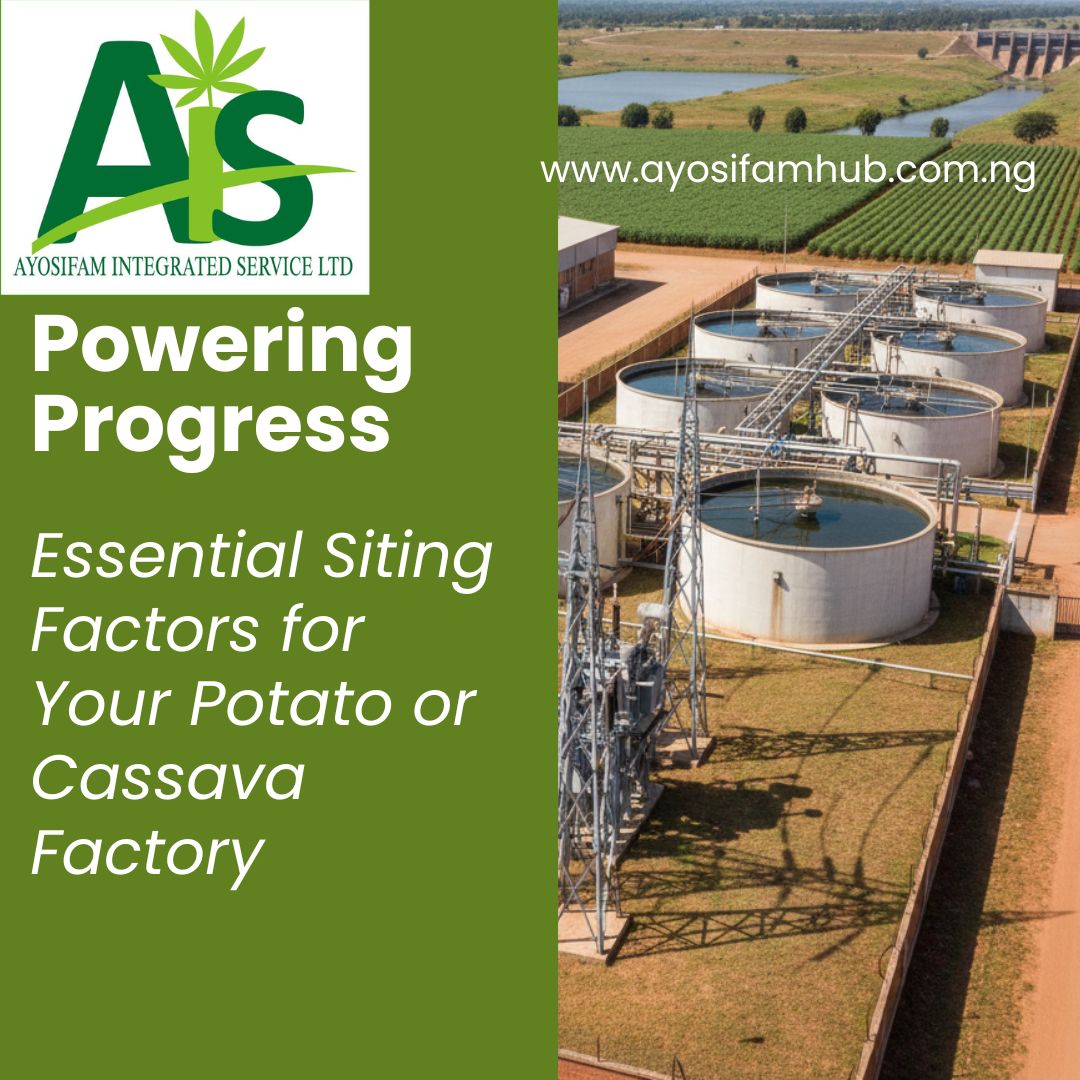
Starting a successful potato or cassava processing factory requires careful planning, and one of the most critical steps is choosing the right location. While proximity to resources or the market may seem like the deciding factor, the fundamental requirements for a processing plant—namely, power and water—often dictate the best site.
Here is a breakdown of the non-negotiable considerations for siting your factory.
⚡ The Non-Negotiable: Steady, Three-Phase Electricity
A processing factory cannot run efficiently on domestic power. The heavy machinery required for washing, peeling, slicing, frying (for potatoes), or chipping and garri-processing (for cassava) demands a robust and stable power supply. Securing this is a core concern.
The site must have access to steady, reliable, three-phase electricity. This is necessary to run the large industrial motors and equipment common in food processing. Instability or frequent outages can lead to damaged machinery, spoiled raw materials, and severe production delays.
Powering Yourself: An Important Contingency
Given the frequent power challenges in many regions, the ability to generate your own electricity is a crucial asset . Assess the cost and feasibility of installing industrial-grade generators or exploring renewable energy options (like solar or biomass) that can provide the necessary three-phase power as a primary or backup source. This self-sufficiency can significantly de-risk your operations.
? Water: The Lifeblood of the Processing Plant
Processing potatoes and cassava is water-intensive, as both require thorough washing to remove soil and debris before they can be processed. Proximity to a reliable, high-volume water source is paramount.
Strategic Siting Options:
-
Near a Dam/Major Water Body: Being close to an existing dam, large river, or reservoir provides the most reliable source for the massive amounts of water required daily.
-
High Water Table for Boreholes: If you cannot be near a surface water source, geological surveys must confirm a consistently high water table. This ensures that industrial-capacity boreholes can be drilled to meet the AyosifamHub factory’s needs without running dry or depleting the source quickly.
Note: Access is not enough; the water quality must also be considered. You will need a water treatment and recycling plan to minimize consumption and manage wastewater discharge responsibly.
?️ Resource Proximity: A Calculated Trade-Off
Contrary to some businesses, being immediately next to the farm or the final consumer is not the most critical factor, provided the distance is manageable.
The factory should be located no more than 50 kilometers from the primary resource (farms).
While closer proximity to resources offers reduced spoilage and lower transport costs for bulk inputs, these areas often lack the robust three-phase power and utility infrastructure (like reliable water supply and road networks) that factory operations demand. Conversely, siting closer to the market offers better logistics for finished product distribution, but the cost and risk of transporting large volumes of raw, perishable tubers over 50+ km must be carefully weighed.
The Verdict
Prioritize the land that can guarantee steady three-phase power and abundant water. A factory with reliable utilities can efficiently process raw materials transported up to 50 km, whereas a factory with unreliable utilities—no matter how close to the farm—will inevitably fail. Securing essential infrastructure is key to long-term success.


