
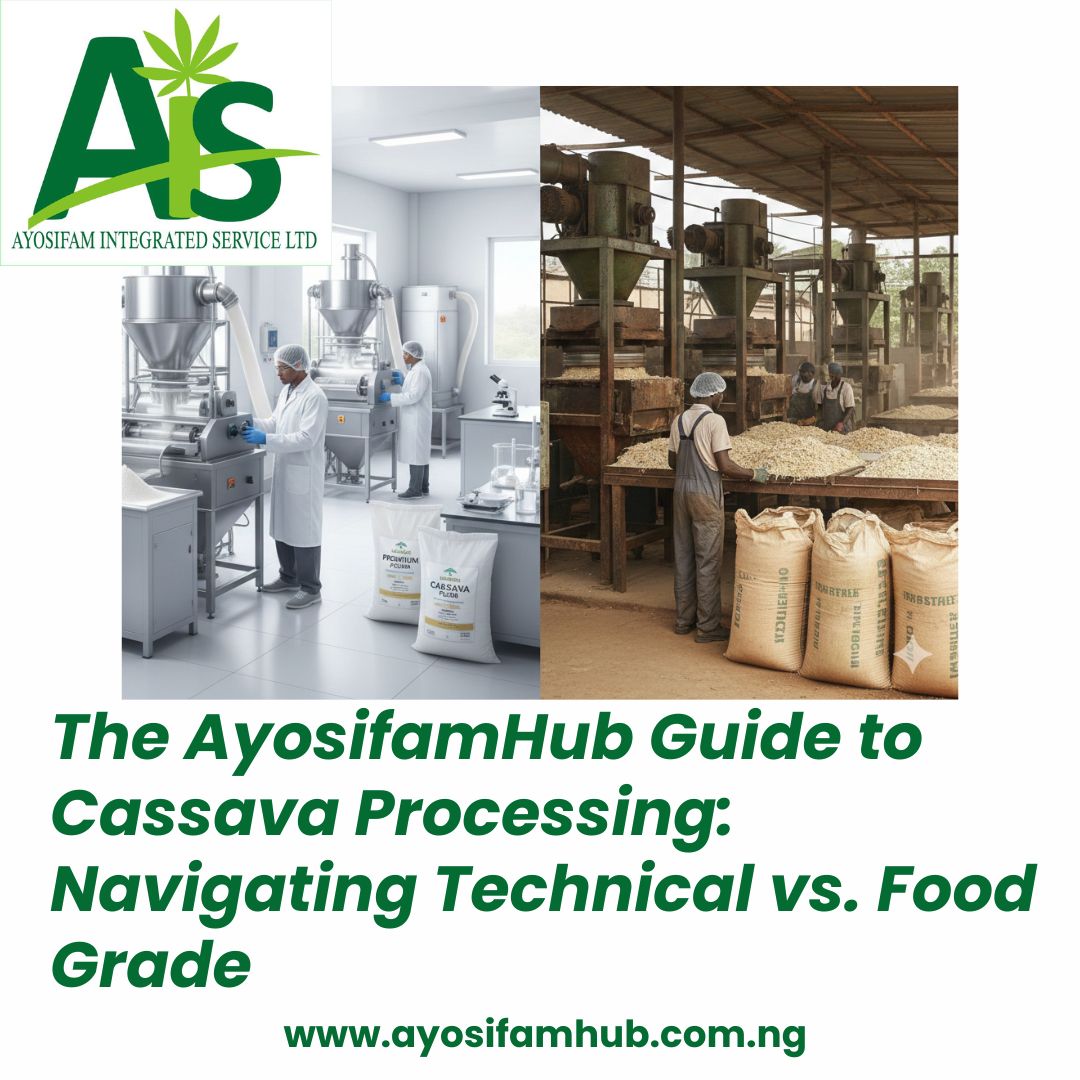
Cassava, the versatile root crop, is a cornerstone of diets and industries across the globe. But not all cassava is created equal, especially when it comes to processing. For entrepreneurs and processors like you, understanding the difference between technical grade and food grade cassava processing isn’t just about quality – it’s about the very core of your business model, the equipment you invest in, and the markets you can access.
At AyosifamHub, we believe in empowering processors with the knowledge to thrive. Let’s dive into the nuances of these two critical processing pathways.
What’s the Big Difference? Purity, Purpose, and Profit!
The fundamental distinction between technical and food-grade cassava processing boils down to purity, safety standards, and the intended end-use. This, in turn, dictates the type of machinery, the intensity of the processing, and ultimately, your operational costs and revenue potential.
1. Food Grade Cassava Processing: For the Plate and Palate
When you hear “food grade,” think human consumption. This is where safety, hygiene, and a pristine end-product are paramount. The goal is to produce cassava products (like starch, flour, or gari) that are not only safe to eat but also meet strict quality standards for taste, texture, and appearance.
Key Characteristics of Food Grade Processing:
-
Purity is King: The absolute lowest possible levels of impurities (sand, fiber, ash), heavy metals, pesticide residues, and microbial contamination.
-
Cyanide Reduction: Cassava naturally contains cyanogenic glycosides. Food-grade processing employs rigorous methods (soaking, fermentation, drying, heating) to reduce cyanide to safe, negligible levels (typically below 10 ppm).
-
Hygiene & Sanitation: Factories operate under strict HACCP (Hazard Analysis and Critical Control Points) or similar food safety protocols. Equipment must be food-safe, easy to clean, and designed to prevent contamination.
-
Appearance & Sensory: The final product is typically bright white, odorless, and tasteless, ensuring it doesn’t alter the characteristics of the food it’s used in.
-
Regulation: Governed by national food safety authorities (e.g., NAFDAC in Nigeria, FDA in the USA) and international standards like Codex Alimentarius.
Essential Food Grade Processing Equipment:
-
High-Efficiency Peelers: To remove the outer skin thoroughly, minimizing impurities.
-
Robust Washers: Multiple stages of washing to remove soil and debris.
-
Precise Graters/Raspers: For efficient breakdown of cassava cells.
-
Fine Filtration & Sifting Systems: Multi-stage sieves and hydrocyclones to separate starch from fiber and other particles. This is a critical investment for high purity.
-
Automated Fermentation Tanks (for products like gari): Controlled environments for consistent fermentation.
-
Advanced Dewatering Machines: Hydraulic presses or decanters to remove water efficiently.
-
Hygienic Drying Systems: Flash dryers, rotary dryers, or tray dryers that ensure even drying without contamination, often with controlled temperatures to maintain product quality.
-
Food-Grade Packaging Machines: To seal and protect the finished product from contamination.
-
Quality Control Lab: Essential for testing moisture, starch content, cyanide levels, and microbial counts.
Typical Food Grade Products:
-
High-Quality Cassava Starch (for food applications, sweeteners, thickeners)
-
Cassava Flour (gluten-free baking)
-
Garii
-
Fufu flour
2. Technical (Industrial) Grade Cassava Processing: For Performance and Power
Technical grade cassava processing focuses on functional properties rather than direct human consumption. The objective is to produce cassava derivatives (primarily starch) with specific characteristics needed for industrial applications, where the presence of certain impurities might be tolerable, or even sometimes beneficial, for the desired outcome.
Key Characteristics of Technical Grade Processing:
-
Performance Over Purity (to a degree): While still aiming for a certain starch content, the emphasis shifts to properties like viscosity, binding strength, and film formation.
-
Less Stringent Hygiene: While basic cleanliness is still important for equipment longevity, the stringent food safety protocols are not required.
-
Cyanide is Less of a Concern: Since the product isn’t for consumption, cyanide reduction is not a primary focus, potentially allowing for less intensive processing steps.
-
Broader Range of Impurities: Higher tolerance for fiber, ash, and other non-starch components, depending on the specific industrial use.
-
Cost-Effectiveness: Processing is often simpler and less expensive, leading to a lower-cost product.
-
Regulation: Primarily guided by industrial standards for quality and performance, not food safety.
Essential Technical Grade Processing Equipment:
-
Basic Peelers & Washers: Sufficient to remove most soil and outer skin.
-
Standard Graters: Efficient for initial size reduction.
-
Simpler Filtration/Sieving: Less complex or fewer stages compared to food-grade, sufficient to separate major fibers.
-
Basic Dewatering Equipment: Often hydraulic presses or simpler centrifuges.
-
Less Refined Drying Systems: Sun drying, open-air drying, or simpler rotary dryers may be acceptable if the end-product doesn’t demand strict whiteness or zero contamination.
-
Industrial Packaging: Robust packaging suitable for bulk transport, not necessarily hermetic sealing.
-
Basic Lab Testing: Focused on starch content, moisture, viscosity, and other relevant industrial specifications.
Typical Technical Grade Products:
-
Industrial Cassava Starch (for paper, textiles, adhesives, bioplastics)
-
Bioethanol feedstock
-
Animal feed components
AyosifamHub’s Advice for Your Factory:
-
Define Your Market FIRST: Before you buy a single piece of equipment, know exactly who you want to sell to. Are you aiming for local food markets, international food ingredient suppliers, or industrial manufacturers? Your market dictates your grade.
-
Budget Accordingly: Food-grade processing requires a higher initial investment in specialized, hygienic equipment and quality control infrastructure. Technical grade can be more budget-friendly to set up.
-
Scale Matters: Start with equipment that matches your current production capacity and allows for future upgrades. AyosifamHub can help you find scalable solutions.
-
Training is Key: Regardless of the grade, proper operation and maintenance of your machinery are crucial for efficiency and longevity.
-
Quality Control is Non-Negotiable: Even for technical grade, consistent quality ensures repeat business. For food grade, it’s a legal and ethical imperative.


