
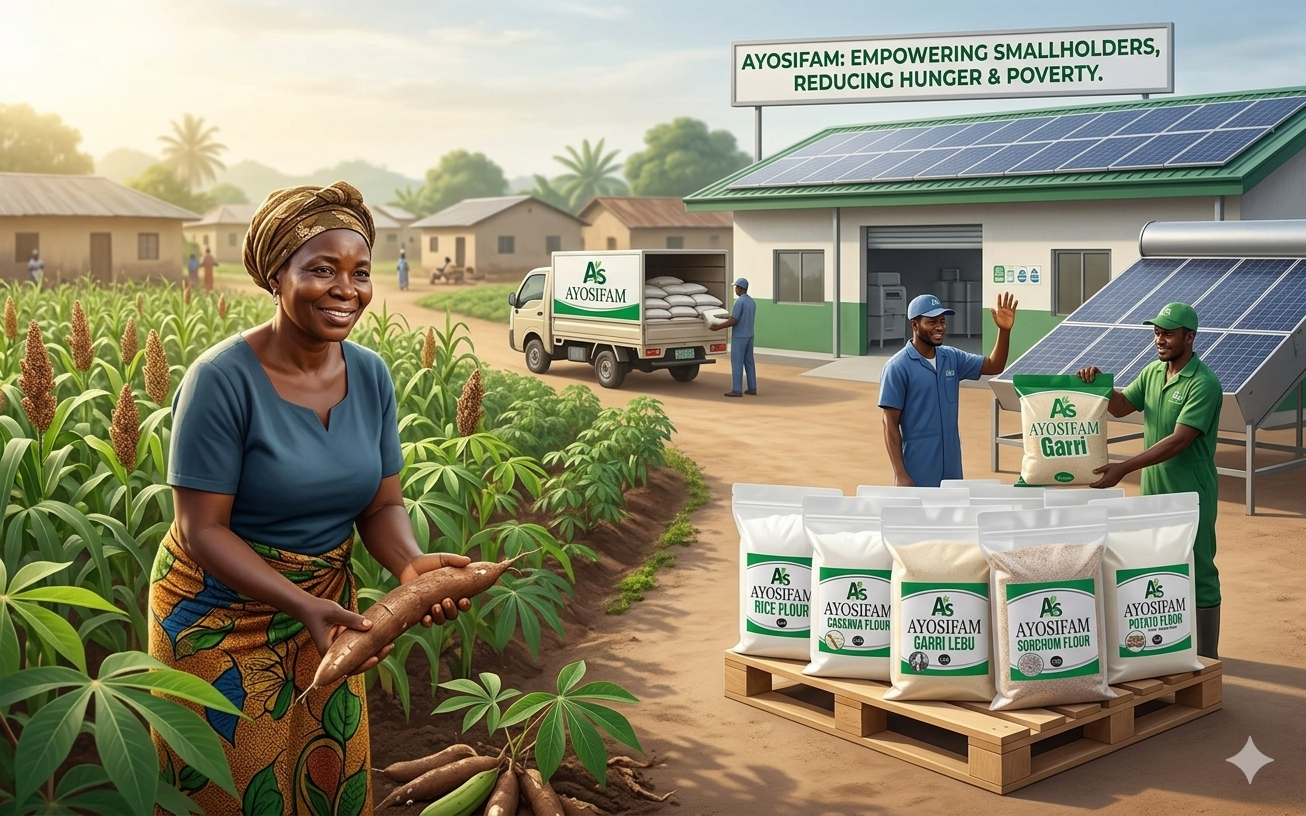
For decades, the conversation around ending hunger in Nigeria has been dominated by a single narrative: we need “modern” large-scale mechanized farming. We are told that massive tractors, imported chemical fertilizers, and thousand-hectare plantations are the only way to feed 200 million people.
But at Ayosifam Integrated Service Limited, we see a different reality on the ground. The truth is that high-tech, Western-style industrial farming often fails in the Nigerian context, while our “traditional” smallholder system—if properly empowered—is the true key to solving food shortages and poverty.
Why the “Industrial Model” Often Stalls in Nigeria
Large-scale mechanized farming requires specific conditions that are frequently absent in our current landscape:
-
The Maintenance Trap: Importing heavy machinery is expensive, but maintaining it is harder. Without local spare parts and specialized engineers, a broken tractor becomes a “monument” in a field rather than a tool for progress.
-
Land Tenure Complexities: Our land ownership systems are deeply rooted in community and heritage. Forcing massive “industrial” blocks often leads to displacement and social friction.
-
Ecological Mismatch: Many “modern” techniques rely on heavy chemical inputs that can strip the delicate Nigerian topsoil over time, leading to long-term infertility.
The Power of the Smallholder: Nigeria’s Real Food Engine
Smallholder farmers—the men and women tending to two or five hectares—already produce over 80% of the food we eat. They are not the problem; they are the solution. Traditional farming is resilient, adaptable, and naturally decentralized.
To end hunger and poverty, we don’t need to replace these farmers; we need to empower them through:
-
Access to Precision Techniques: Giving them better seeds and climate-smart information rather than just bigger machines.
-
Digital Marketplaces: Connecting them directly to buyers so they aren’t cheated by middlemen.
-
Sustainable Inputs: Moving toward organic enhancers and biochar that keep the land healthy for the next generation.
The Missing Link: Supporting the SME Food Processor
Even if a smallholder farmer has a record-breaking harvest, it means nothing if the crops rot in the sun. This is where SME (Small and Medium Enterprise) food processors like Ayosifam come in.
The bridge between “hunger” and “abundance” is Processing. By supporting local processors, we solve two problems at once:
-
Post-Harvest Loss: We take the “traditional” harvest and immediately stabilize it into flours (like our Cassava or Sorghum flours), ensuring food lasts for months, not days.
-
Rural Wealth: When an SME processor sets up shop near a farming community, it creates a guaranteed market for those farmers and technical jobs for the youth.
The Ayosifam Vision: A Hybrid Future
At Ayosifam, we don’t believe in looking backward, but we do believe in looking locally. Our approach combines the wisdom of traditional farming with the efficiency of modern, climate-smart processing.
We use solar drying technology and industrial-grade milling to turn the labour of the smallholder into a premium, additive-free product for the urban table. This is how you reduce poverty: you don’t build one giant farm; you support a thousand small ones and the local factories that power them.


