
June is traditionally a month of celebration for smallholder farmers across Nigeria. The rains have arrived, the soil smells alive, and the rush to get seeds into the ground is at an all-time high.
But as we look at the fields this season, we have to face a hard reality: climate change is no longer a future threat—it is happening right now in our fields.
Lately, we have seen a dangerous trend where a heavy downpour is immediately followed by 5 to 7 days of intense, blazing heat. If you rush to plant your crops simply because you saw rain yesterday, those seeds could easily die beneath the surface because the subterranean soil moisture is still far too low.
At Ayosifam Integrated Service Limited, our mission is to ensure that no farmer’s investment goes to waste. Before you commit your hard-earned seeds and stems to the earth this week, use these climate-smart hacks to protect your yield.
1. The Golden Rule: Squeeze Before You Sow
Never let the sky fool you. Just because the topsoil looks wet or muddy does not mean the soil is ready.
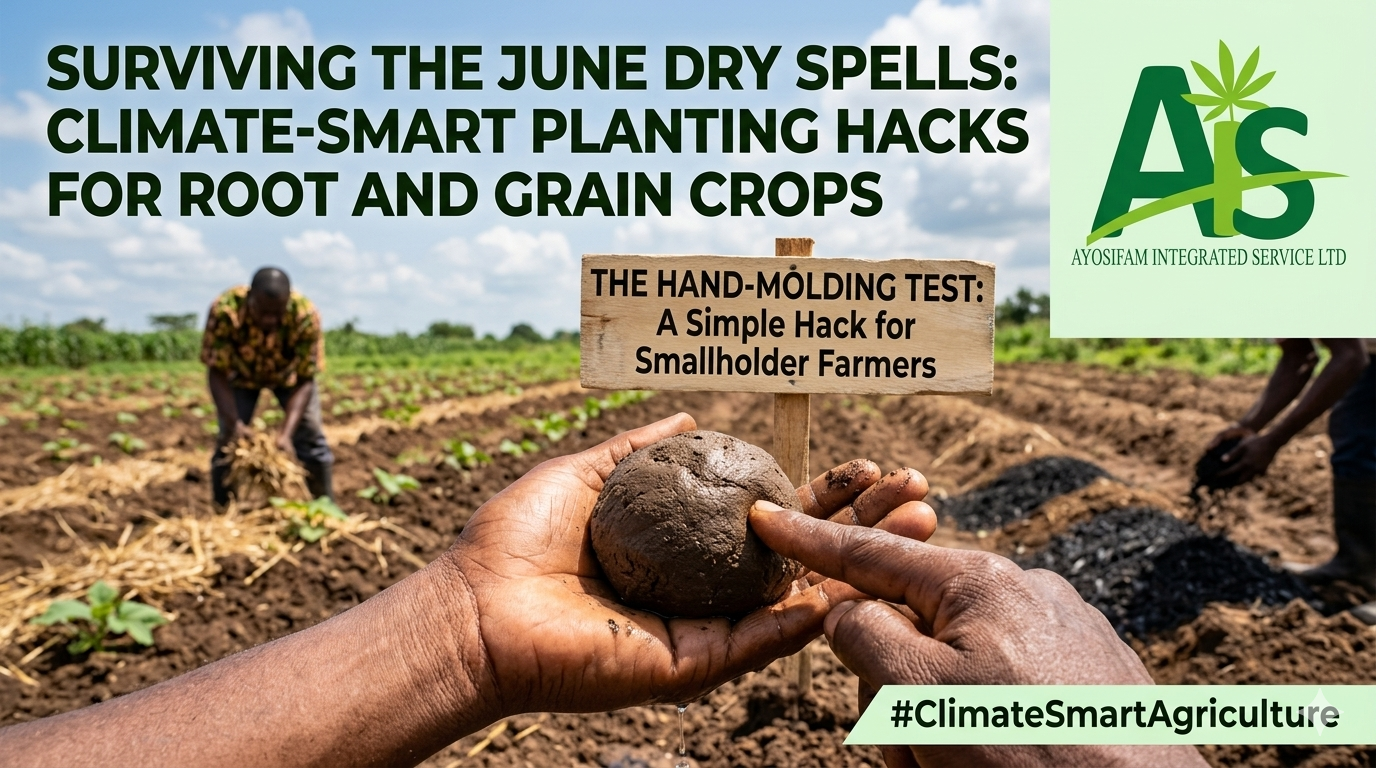
Before planting grains like maize, millet, and sorghum, or rooting crops like cassava and sweet potatoes, perform the Hand-Molding Test:
-
Dig Deeper: Scoop a handful of soil from about 15 to 30 centimeters (6 to 12 inches) deep—right where your crop’s roots will live.
-
The Palm Test: Squeeze the soil firmly in your fist. If it crumbles and cannot hold a solid ball shape, it is too dry. The moisture from the rain has not penetrated deeply enough. If you plant now and the rain pauses for 5 days, your crops will wither and die.
-
The Ready Signal: If the soil forms a firm, pliable ball that stays together when you open your hand, the moisture level is optimal for planting.
2. Match Your Soil Moisture to the Right Crop
Different crops have different tolerances for water. Planting the wrong crop in mismatched soil moisture leads to immediate post-harvest loss before the harvest even begins.
-
For Grains (Maize, Sorghum, Millet): These grains prefer well-drained, airy soil. If you squeeze the soil and water actively drips out between your fingers, the ground is waterlogged. Wait 2 to 3 days for the excess water to drain, or your seeds will drown from a lack of oxygen.
-
For Root Crops (Cassava & Sweet Potatoes): Cassava and sweet potatoes need loose, breathable mounds to expand. Squeezing heavy, sticky clay into a hard, shiny ball indicates that the soil will suffocate your root crops, leading to rot. Stick to sandy-loam soils that mold easily but don’t trap standing water.
3. Climate-Smart Hacks to Lock in Soil Moisture
If the rains pause unexpectedly after you have already planted, you can use these two natural methods to keep your soil damp:
-
Mulching: Cover your crop beds or mounds with dry leaves, grass, or leftover crop residues. This acts as a protective blanket, blocking the harsh sun and preventing the soil moisture from evaporating.
-
The Power of Biochar: Mixing biochar (highly porous charcoal created from organic agricultural waste) into your soil is a game-changer. Biochar acts like a sponge beneath the earth, trapping moisture and nutrients during heavy rains and slowly releasing them to the plant roots during sudden dry spells.
Building Resilience Together
Agriculture is an investment of time, money, and sweat. By taking just two minutes to put the soil in your hands and test its true moisture level, you protect your farm from the unpredictable shifts of climate change.
We are proud to work alongside our growing network of over 2,000 smallholder farmers to share these simple, high-yield agronomic practices. Let’s adapt, farm smarter, and secure our food supply together.
Are you preparing your fields this week? Drop your location in the comments below, and let’s discuss the soil moisture status in your farming zone!
For more real-time agricultural advisories, farmer training tools, and market links, stay connected to the AyosifamHub platform.


