
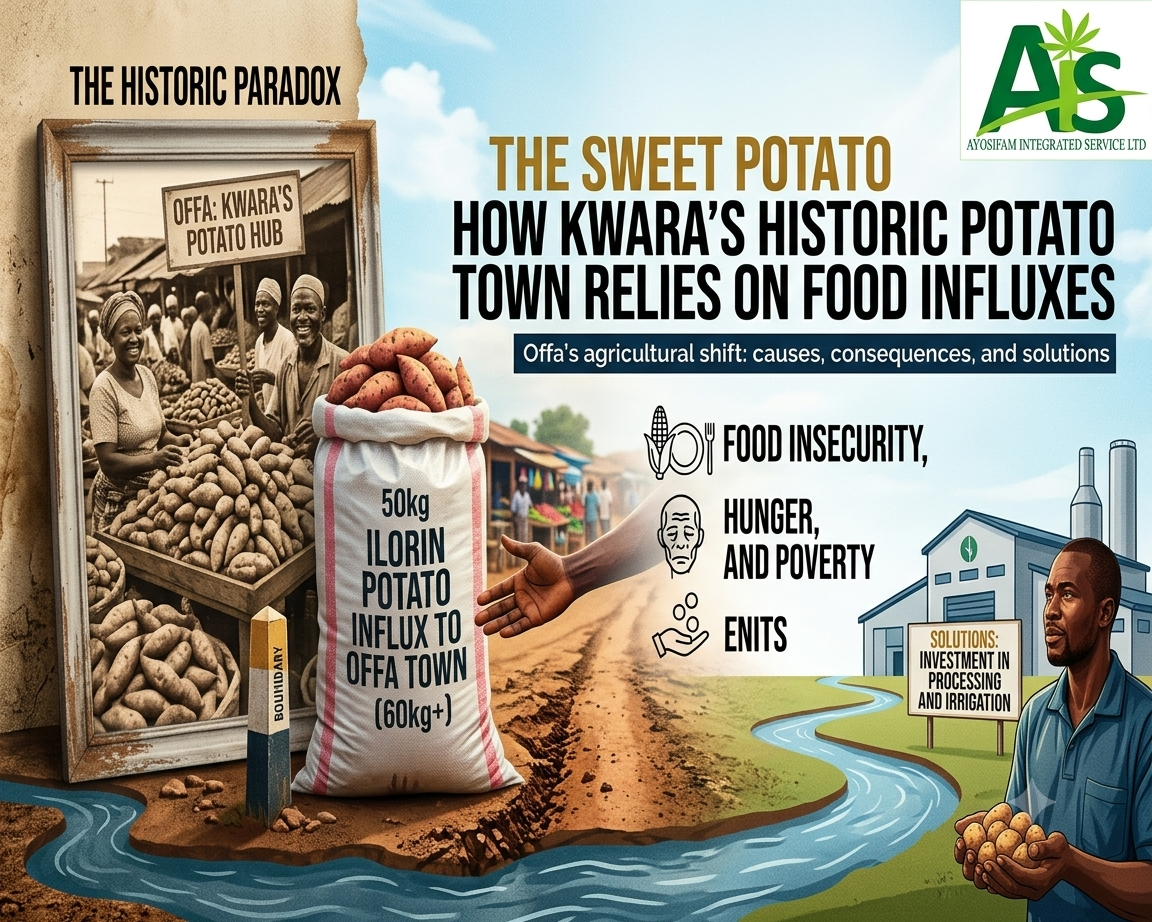
Offa was once proudly celebrated for its agricultural abundance, earning the famous historical nickname: Offa, the town of sweet potatoes. In those days, fields flourished, and the local markets overflowed with the tuber. Yet today, a surprising and concerning shift is happening in Kwara State. Between the months of March and July, sweet potatoes are no longer flowing out of Offa—instead, they are being transported into Offa from Ilorin.
Even more revealing is the origin of this produce: the sweet potatoes filling the markets in Ilorin are actually being brought in from the Edu Local Government Area.
This unusual shift highlights deep structural issues within our local agricultural systems, directly tied to the growing challenges of food insecurity, rural poverty, and inflation.
Understanding the Paradox: Why the Shift?
The fact that a town famous for potato cultivation now relies on supplies from other regions during the March-to-July window points to three distinct agricultural bottlenecks:
-
The Dry-Season Gap: The months spanning March to July represent the peak of the agricultural lean season. Without developed irrigation infrastructure, traditional farming regions like Offa face extended dry spells that halt continuous planting.
-
Post-Harvest Loss: Tubers are highly perishable. Due to a historic lack of specialized storage and mid-stream processing facilities in rural communities, harvests from peak seasons frequently spoil instead of being preserved to cover these lean dry-season months.
-
Shift in Regional Production Hubs: Over time, production dynamics have shifted. Regions like Edu LGA, blessed with favorable floodplains and specific river basin characteristics, have become the primary source for the crop, leaving older processing and trading hubs dependent on long-distance logistics.
The Economic Toll: Soaring Prices and Inflation
When food has to travel further through complex supply chains, the consumer pays the price.
Currently, in Ilorin markets, a 50kg fertilizer sack packed tightly with sweet potatoes weighs an average of 60kg to 66kg and commands a wholesale price of 23,000 Naira.
By the time intermediaries add the rising costs of diesel, vehicle maintenance, multiple market levies, and transport fees to move these heavy bags from Edu to Ilorin, and then onward to Offa or other neighboring towns, the retail price spikes dramatically. For families in retail destinations, a crop that was once a cheap, accessible staple is fast becoming a luxury item.
The Real-World Impact: Food Insecurity, Hunger, and Poverty
This supply chain pressure does not just affect wallets—it directly fuels a cycle of vulnerability:
-
Escalating Food Insecurity: When structural shortages force prices upward, vulnerable households are priced out of nutritious meals. They are forced to ration food or pivot to lower-quality, nutrient-starved alternatives.
-
Deepening Rural Poverty: Smallholder farmers in regions lacking processing infrastructure remain trapped in poverty. Forced to sell their harvests immediately at low prices to middlemen because they cannot store them, they miss out on the financial rewards of the high-priced lean season.
-
The Spread of Hunger: When historical agricultural strongholds lose their production edge, the local food safety net frays, leaving communities increasingly exposed to seasonal hunger.
The Way Forward: Building a Climate-Smart Value Chain
To reverse this trend, restore regional food security, and stabilize prices, Kwara’s agricultural sector must move past outdated practices. We must act decisively in three key areas:
-
Decentralized Industrial Processing: The most effective way to eliminate the seasonal scarcity between March and July is to process fresh, perishable tubers into shelf-stable forms immediately after harvest.
-
Empowering the “Processor-Only” Infrastructure Model: Agribusinesses must support local growers rather than competing with them for land. By establishing dedicated processing hubs directly within communities, operators can provide smallholders with a guaranteed, fair-price destination for their crops.
-
Clean Tech and Digital Integration: Transitioning processing plants to sustainable, zero-emission infrastructure—like enclosed parabolic solar drying—ensures food safety and standardizes quality without relying on erratic fossil fuel costs. When paired with direct-to-consumer digital marketplaces, rural farmers can bypass exploitative middlemen entirely, stabilizing food prices for the final consumer.


