
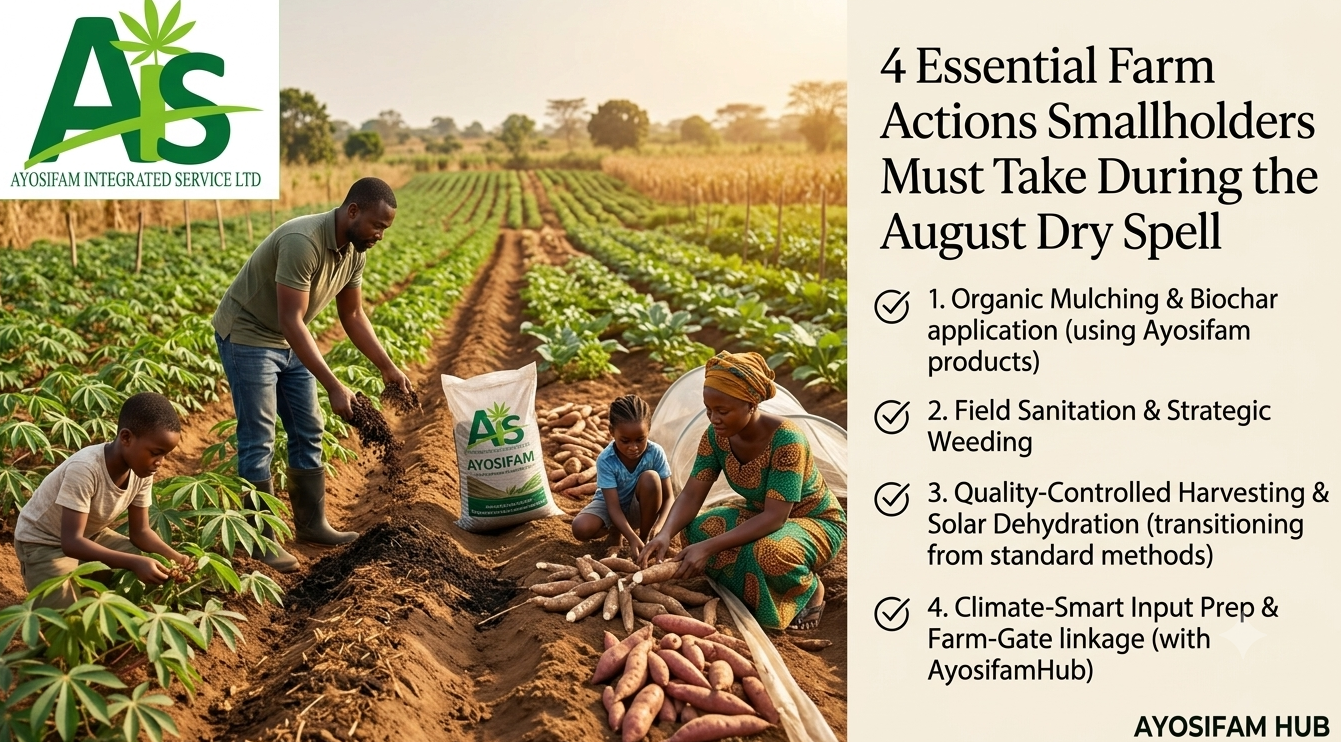
Every year across Nigeria, the brief pause in heavy rainfall—often referred to as the August Break—presents both a challenge and a massive opportunity for smallholder agricultural producers. While the temporary sunshine provides relief from waterlogged fields, the sudden drop in moisture can stress developing crops if farms are unprepared.
For farmers across Kwara State and surrounding regions, utilizing this short dry window effectively can mean the difference between a mid-season crop loss and a bumper harvest later in the year.
At Ayosifam, we work closely with our outgrower network to implement climate-smart agricultural practices that build soil resilience and safeguard harvest quality. Here are 4 essential actions every smallholder farmer should take during this dry spell:
1. Apply Organic Mulching & Biochar to Retain Soil Moisture
With rainfall temporarily pausing, soil surfaces dry out rapidly under direct sunlight, causing root heat stress and water loss through evaporation.
-
Mulch Covered Ridges: Cover exposed soil around crop bases (especially cassava, sweet potato, and pepper beds) with organic crop residue, dry grass, or leaves. This creates a protective thermal barrier, keeping root zones cool and locking in subsurface moisture.
-
Incorporate Biochar: Applying organic biochar or compost during field touch-ups enhances the soil’s water-retention capacity, allowing crops to thrive even through extended dry days.
2. Conduct Field Sanitation & Strategic Weeding
Dry, clear days offer the best conditions for clearing aggressive weeds without the risk of them immediately re-rooting in wet soil.
-
Clear Pest Hideouts: Weeds compete fiercely with young crops for limited soil moisture and nutrients while serving as breeding grounds for insect pests.
-
Sun-Cure Weeds: Uproot weeds and allow them to dry out completely in the sun. Dried weed biomass can subsequently be repurposed as organic mulching material across your crop beds.
3. Implement Solar Dehydration for Early Harvests
If you are harvesting early-season crops like root tubers, peppers, or tomatoes during this break, taking advantage of the bright sun hours is critical to prevent post-harvest spoilage.
-
Transition Away from Roadside Drying: Avoid open-air drying on bare ground or roadside surfaces where crops are exposed to dust, livestock, and sudden rain surprises.
-
Leverage Clean Dehydration: Utilize hybrid or parabolic solar dryers to process fresh harvests into clean, low-moisture chips, flakes, or primary dried products. Hygienic dehydration locks in crop value and extends shelf life without relying on expensive fossil fuels.
4. Inspect Fields & Prepare for Second-Season Planting
Use this operational window to evaluate plant health and prepare inputs for the upcoming late-season rains.
-
Pest & Disease Scouting: Inspect root zones and leaves for sign of stem borers, aphid infestations, or blight. Treating early prevents widespread crop loss when rains resume.
-
Land Preparation: Clear unused plots, construct fresh ridges, and organize certified seeds or planting stems for secondary crops like legumes, maize, or short-duration vegetables.
Partner with Ayosifam for Guaranteed Market Access!
Navigating seasonal shifts requires clean technology, practical knowledge, and reliable off-take partnerships. Through the AyosifamHub outgrower framework, we support local farmer clusters with technical capacity building, sustainable processing solutions, and direct market linkage for processed commodities.
🌾 Are you a smallholder farmer or cooperative coordinator?
Connect with Ayosifam Integrated Service Limited today to join our sustainable outgrower network and secure guaranteed off-take for your cassava, sweet potato, and grain harvests!


