
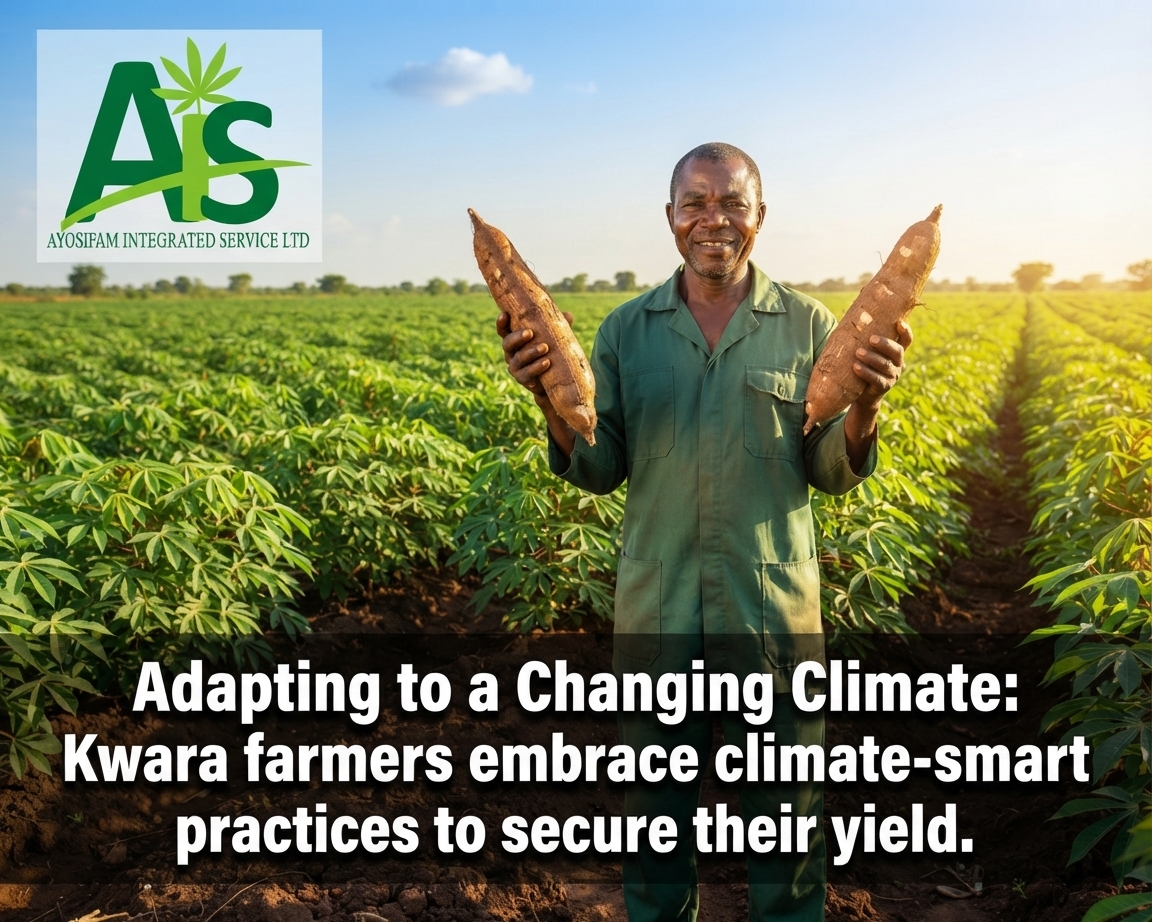
Agriculture has always been a game of patience and resilience, but today, farming families across Kwara State face an increasingly unpredictable environment. From erratic rainfall patterns and dry spells to land degradation, changing weather dynamics make it harder than ever to rely on traditional farming rhythms alone.
Fortunately, critical support is rolling out directly to our local farming communities. At the state level, initiatives like the Kwara State Agro-Climatic Resilience in Semi-Arid Landscapes (KWACReSAL) project are stepping up to help smallholder networks combat these environmental challenges and future-proof their harvests.
What is KWACReSAL?
Operating as part of a broader, multi-state effort, KWACReSAL is designed to tackle land degradation and build long-term climate resilience across vulnerable agricultural zones. Rather than just addressing the symptoms of a changing climate, the project focuses on sustainable landscape management, restoring soil health, and protecting vital watersheds.
For smallholder farmers who form the backbone of our food supply chains, the project offers practical pathways to transition from vulnerable subsistence farming to stable, climate-smart production.
Key Areas Where Farmers Can Tap In
If you are a smallholder farmer or part of an agricultural cooperative in Kwara State, here are the core areas where you can leverage these networks:
1. Specialized Training & Farmer Field Schools
Traditional farming know-how is invaluable, but modern challenges require modern tools. KWACReSAL is rolling out hands-on training programs and Farmer Field Schools. These platforms bring agronomic education directly to the grassroots level, teaching farmers how to adapt to shifting weather windows, manage soil moisture, and optimize field productivity.
2. Climate-Smart Agronomic Practices & Soil Health
Healthy soil is the foundation of high-yield harvests and quality raw materials. Through specialized demonstration plots, farmers can learn and observe best practices in organic-inorganic fertilizer management, erosion control, and agroforestry. Adopting these methods helps restore degraded lands, protects topsoil from washing away during heavy downpours, and locks in vital nutrients for root crops like cassava and sweet potatoes.
3. Utilizing Drought-Tolerant & Certified Seeds
One of the most effective defenses against erratic rainfall is the use of resilient crop varieties. Programs under climate-resilient initiatives encourage and facilitate access to improved, disease-resistant, and drought-tolerant seeds. Planting certified seeds ensures greater uniformity at harvest, minimizes total crop failure during unexpected dry spells, and guarantees better raw material quality for downstream agro-processing.
Why This Matters for the Entire Food Value Chain
At Ayosifam, we believe that sustainable processing starts right at the farm gate. High-grade flour, clean-label packaging, and reliable food security cannot exist without resilient raw materials. When smallholder farmers are empowered with climate-smart training and better inputs, the entire agricultural ecosystem wins:
-
For Farmers: Greater yield security, protected incomes, and lower vulnerability to climate shocks.
-
For Processors: A steady, predictable supply of high-quality root crops and grains that meet industrial and regulatory standards.
-
For the Environment: Restored landscapes, healthier soils, and a lower carbon footprint across Kwara’s agricultural corridors.


