In modern agribusiness, sustainability, efficiency, and transparency are no longer optional—they are the core pillars of a profitable and future-proof enterprise. At Ayosifam Integrated Service Limited, we are constantly innovating to improve our operations, lower our carbon footprint, and deliver premium, NAFDAC-certified agricultural products to our customers.
A major milestone in this journey has been our transition to clean energy processing, combined with cutting-edge digital data management. Here is how our parabolic solar drying systems and decentralized blockchain architecture are reshaping our production lines for potato and cassava.
The Power of the Sun: Parabolic Solar Drying
Processing root crops like potato and cassava requires precise moisture control to produce high-quality flour and staples. Traditionally, processing facilities rely heavily on diesel-powered dehydrators and generators to dry and process produce, which incurs massive operational costs and releases heavy emissions into the atmosphere.
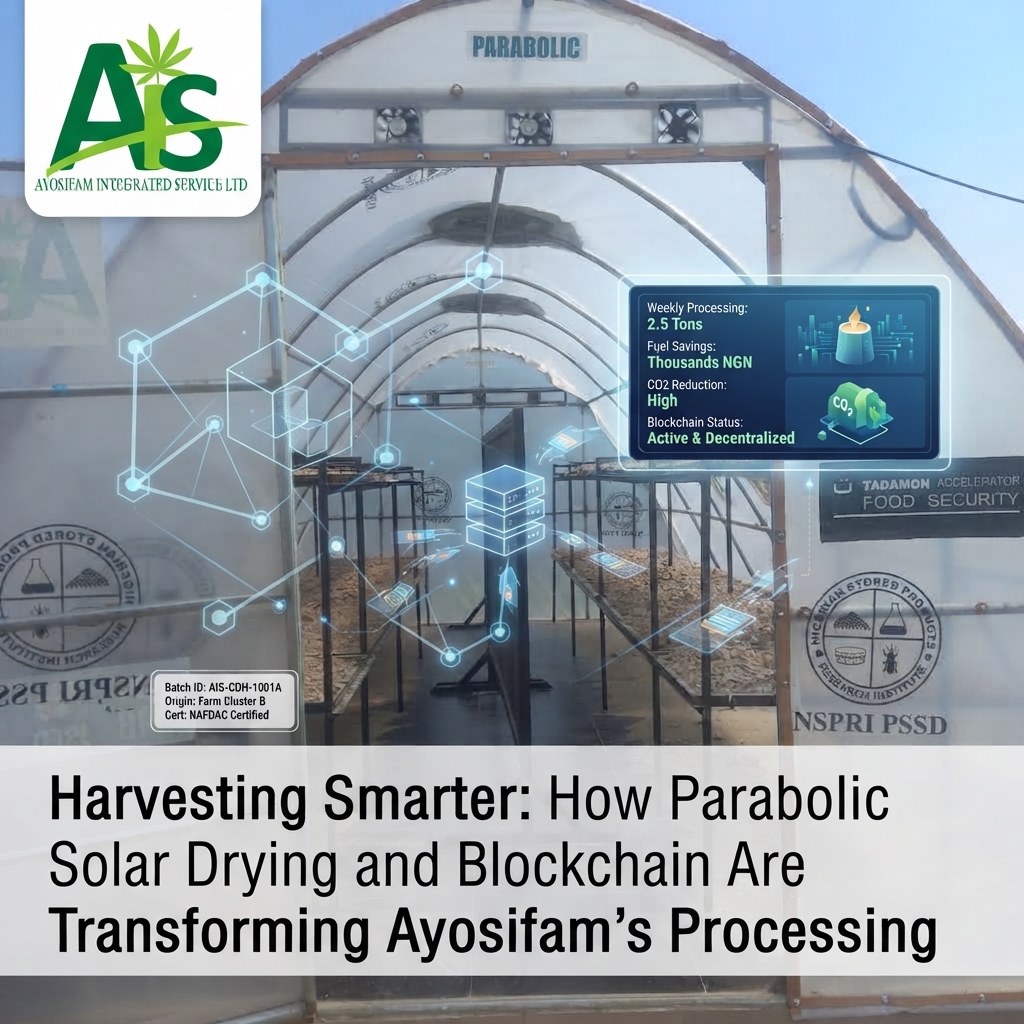
By integrating parabolic solar drying technology into our operations, Ayosifam processes an impressive 2 to 2.5 tons of potato and cassava per week. This transition has unlocked massive benefits for our business, our community, and the environment:
Impact Area |
Traditional Diesel Processing |
Ayosifam Parabolic Solar Processing
|
|---|---|---|
| Weekly Processing Volume |
2.5 Tons |
2.5 Tons (Sustainable Clean Energy) |
| Weekly Fuel Consumption |
High diesel usage (approx. 150-200 liters/week) |
Zero diesel required |
| Weekly Financial Savings |
Baseline cost |
Saves ₦84,000 Naira weekly on diesel and generator maintenance |
Environmental Impact |
High CO₂ emissions contributing to ozone layer depletion |
Significantly reduced carbon footprint and zero direct emissions |
Protecting the Ozone Layer and Cutting Costs
The financial savings speak for themselves. By eliminating our reliance on diesel-powered dehydrators, we save tens of thousands of Naira every single week on fuel purchases, generator servicing, and maintenance. These savings directly strengthen our operational efficiency, allowing us to maintain affordable pricing for our retail lines like Ayosifam Cassava Flour, Potato Flour, and Fufu Flour without compromising on quality.
Beyond the ledger, our environmental impact is profound. By substituting fossil fuels with clean solar thermal energy, we prevent substantial amounts of carbon dioxide (CO₂) from entering the atmosphere each week, actively combating ozone layer depletion and supporting local climate-smart agricultural targets in Kwara State.
Trust Through Technology: The Role of Decentralized Blockchain Data
Sustainability at Ayosifam does not stop at clean energy; it extends deep into how we manage our supply chain data. To ensure absolute transparency, trust, and traceability from the farm gate to the factory, we leverage blockchain technology.
-
Decentralized Records: Unlike traditional centralized databases that can be tampered with or lost, our supply chain data is decentralized across a secure digital ledger.
-
Complete Traceability: Every batch of cassava and potato logged into AyosifamHub carries verified data regarding its harvest origin, quality checks, and processing timeline.
-
Empowering Stakeholders: Smallholder farmers, buyers, and processors can interact within a secure ecosystem where transactional records and crop listings are immutable and transparent.


