
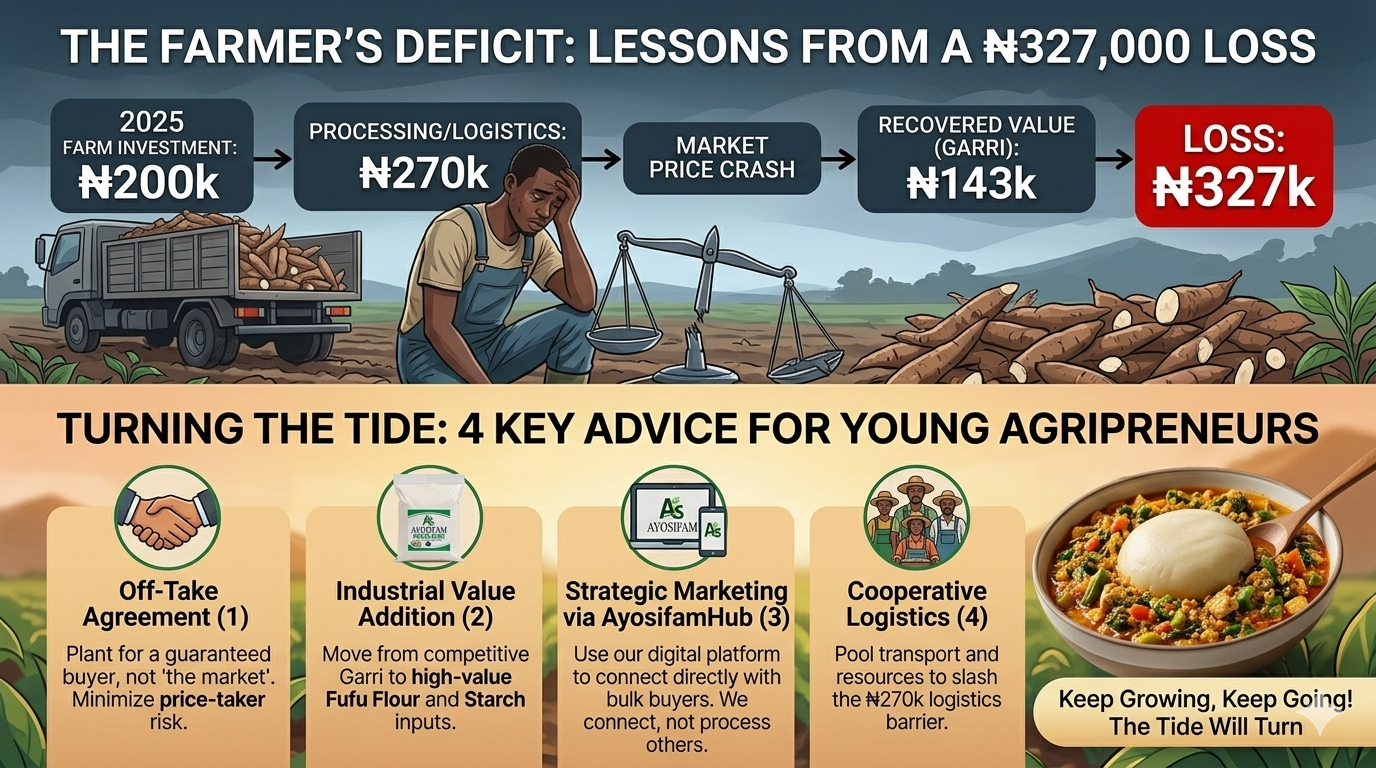
Recently, a story went viral on X (formerly Twitter) that struck a chord with every one of us in the agricultural space. Farmer Adeoye shared a painful breakdown: after investing ₦200,000 in a cassava farm and spending another ₦270,000 on processing and logistics, the total return was just ₦143,000.
A loss of ₦327,000. And that doesn’t even count the “human capital”—the sweat, the sun, and the sleepless nights.
When food prices “crash,” consumers celebrate, but farmers bleed. To the young Nigerians looking at this and wondering if agriculture is still the way, here is how we can turn the tide and build a more profitable future.
1. From “Farmer” to “Agripreneur”
The greatest risk in farming is being a price-taker—someone who grows a crop and waits for the market to tell them what it’s worth. To be profitable, young farmers must think like entrepreneurs:
-
Market-First Approach: Don’t plant because it’s “cassava season.” Plant because you have a signed off-take agreement or a confirmed buyer.
-
Cost-Benefit Mapping: Before the first seed hits the ground, calculate your “break-even” price. If the market price falls below that, you need a Plan B (like storage or industrial processing) already in place.
Here is the revised section of the article, reflecting the specific focus on Fufu Flour and clarifying the role of the AyosifamHub platform.
2. The Power of Industrial Value Addition
Farmer Adeoye made a brave move by processing his cassava into Garri to save his harvest. However, Garri is a highly competitive, low-margin retail product. For young farmers to see real profit, we must look toward High-Value Industrial Inputs:
-
Fufu Flour & HQCF: Instead of just Garri, consider processing into Fermented Fufu Flour or High-Quality Cassava Flour (HQCF). These products serve as healthy, whole-grain alternatives and industrial baking inputs that often command a more stable price point.
-
Industrial Feedstock: Exploring the production of Starch or Ethanol inputs moves you away from the volatile local food market and into the manufacturing sector, where demand is consistent year-round.
3. Strategic Marketing via AyosifamHub
In today’s economy, being a great farmer isn’t enough; you must be a visible one. This is why digital transformation is no longer a luxury.
-
While our physical processing facility in Kangile remains a dedicated, closed environment to ensure the strict “Clean and Safe” standards of our own brand, we created AyosifamHub as a bridge for the community.
-
Direct Market Access: Young farmers can use the AyosifamHub digital platform to bypass exploitative middlemen and connect directly with bulk buyers and industrial off-takers who value quality and traceability.
4. Shared Logistics: Strength in Numbers
Logistics took ₦270,000 of Farmer Adeoye’s budget—more than the initial farm investment! For young farmers, cooperatives are no longer optional.
-
Shared Transport: Instead of hiring a truck alone, five farmers can pool resources to move 50 tons at a fraction of the cost. By coordinating through digital networks, you can ensure your “cost per bag” remains low even when fuel prices are high.
A Final Word to the Keepers of the Soil
To Farmer Adeoye and every young person currently “growing at their own pace”: Do not let the current tide wash away your vision. Agriculture must be an intelligent, tech-driven, and value-added venture. At Ayosifam, we use our platform to shine a light on quality producers and ensure that the tide, when it turns, favors the prepared.
#FarmerAdeoye #Agribusiness #AyosifamHub #NigeriaFarming #ValueAddition #FufuFlour


