
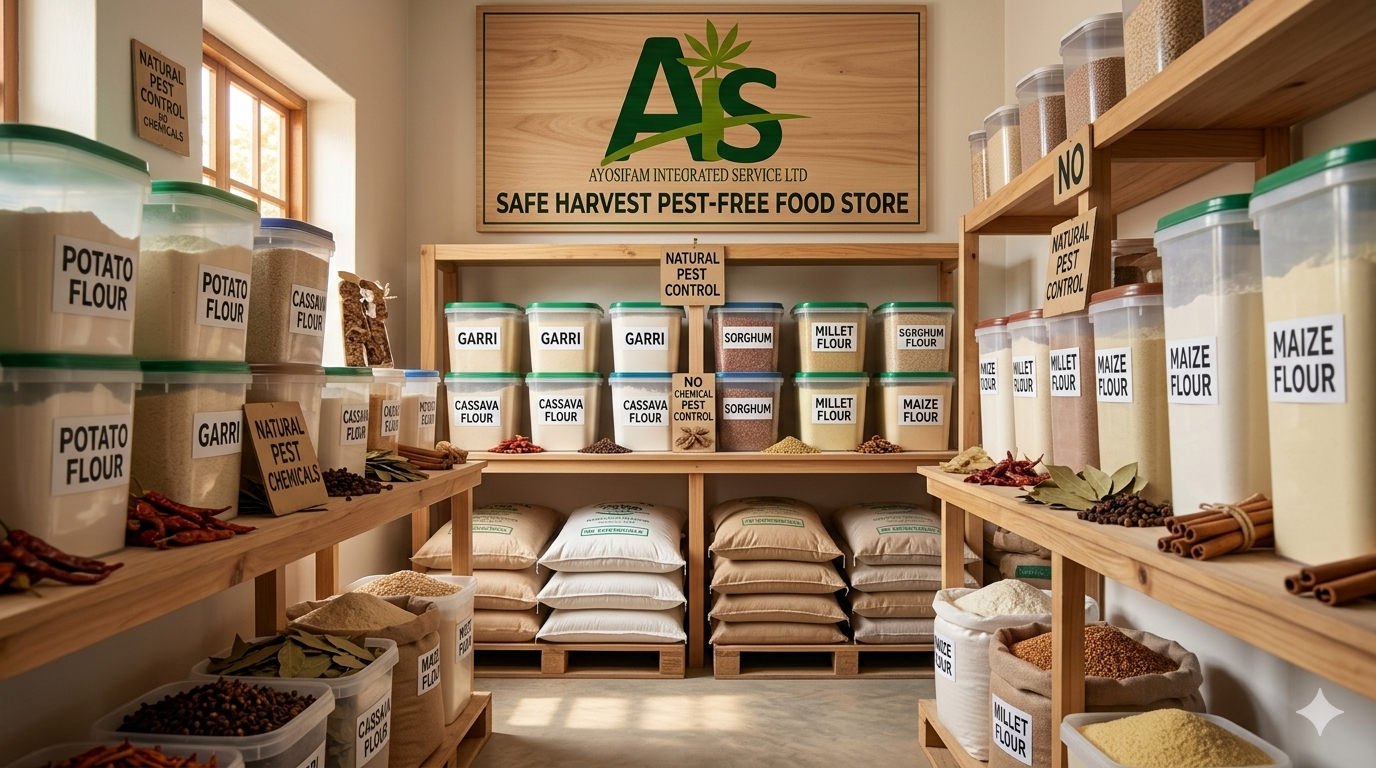
At Ayosifam Integrated Service Limited, we understand that a successful harvest is only half the battle. Protecting your hard-earned produce from storage pests is essential for food security and maintaining the nutritional value of our staples. Pests like ants, rodents, cockroaches, and even wall geckos can compromise the safety of your Potato flour, Garri, Cassava flour, Sorghum flour, Millet flour , Fufu and Maize flour.
To keep your store safe without resorting to harsh chemicals, follow this natural preservation guide.
1. The First Line of Defense: Solar Drying
The most effective way to deter pests is to remove what they crave most: moisture.
-
Optimal Dryness: Pests and “will-will” (weevils) struggle to survive in environments with very low moisture.
-
The Ayosifam Standard: We utilize 100% renewable parabolic solar technology to ensure our flours reach a deep, consistent dryness that naturally inhibits pest infestation. Ensure your home-stored grains and flours are bone-dry before sealing them.
2. Natural Repellents for Insects (Ants & Cockroaches)
You can create a “no-go zone” for crawling insects using simple items from your kitchen:
-
Dried Chili Peppers & Cloves: Drop a handful of dried chilies or cloves into your containers of Garri or Sorghum. The pungent aroma is a natural deterrent for ants and weevils.
-
Vinegar & Lemon Spray: For store shelves, wipe surfaces with a mixture of water and white vinegar or lemon juice. This disrupts the scent trails that ants and cockroaches use to find food.
-
Bay Leaves: Tucking dried bay leaves into the corners of your store or directly inside flour bags acts as a powerful natural repellent.
3. Rodent-Proofing Your Store
Rodents are persistent, but you can make your store unattractive to them:
-
Elevation is Key: Never store bags directly on the floor. Use metal or treated wooden pallets to keep food at least 30cm off the ground.
-
Peppermint Oil: Rodents have highly sensitive noses. Soak cotton balls in pure peppermint oil and place them near doorways or potential entry holes to discourage them from entering.
-
Steel Mesh: Ensure all ventilation points are covered with fine steel mesh that rodents cannot chew through.
4. Managing Wall Geckos Naturally
While wall geckos eat some insects, their droppings can contaminate food stores.
-
Eggshells: Place empty, dry eggshells near windows or entry points. Geckos view these as the presence of a larger predator and will often avoid the area.
-
Garlic & Onions: The strong smell of garlic cloves or sliced onions hung near entry points acts as a natural gecko repellent.
-
Light Management: Geckos are attracted to the insects that gather around lights. Keep store lights off when not in use to reduce the “buffet” that draws them in.
5. The Gold Standard of Storage
-
Airtight Containers: Use food-grade plastic drums or glass jars with tight-sealing lids. This prevents the “food scent” from escaping and attracting pests.
-
Hygiene: Regularly sweep up any spills of Millet or Maize flour. Even a small amount of dust can attract a colony of ants.
Building a Food-Secure Future
By adopting these natural methods, we protect the hard work of the 2,000+ smallholder farmers in our network and ensure that our nutrient-dense, NAFDAC-certified products remain safe for your family. Proper storage is a critical step in our mission to eliminate the 40% post-harvest loss in Nigeria.
Are you ready to upgrade your agricultural value chain? Visit Ayosifam Integrated Service Limited in Ilorin to see our climate-smart processing in action!


