
Many of us look at the sky, see the arrival of the rainy season, and assume it is automatically time to plant. But as any experienced farmer knows, the sky can be deceiving.
Climate change has made rainfall patterns highly unpredictable. The fact that rain fell yesterday does not guarantee that the soil is ready to sustain a new crop. If seeds are planted and the rain stops for just five days, the young crop can easily die because the soil moisture deep down is still too low.
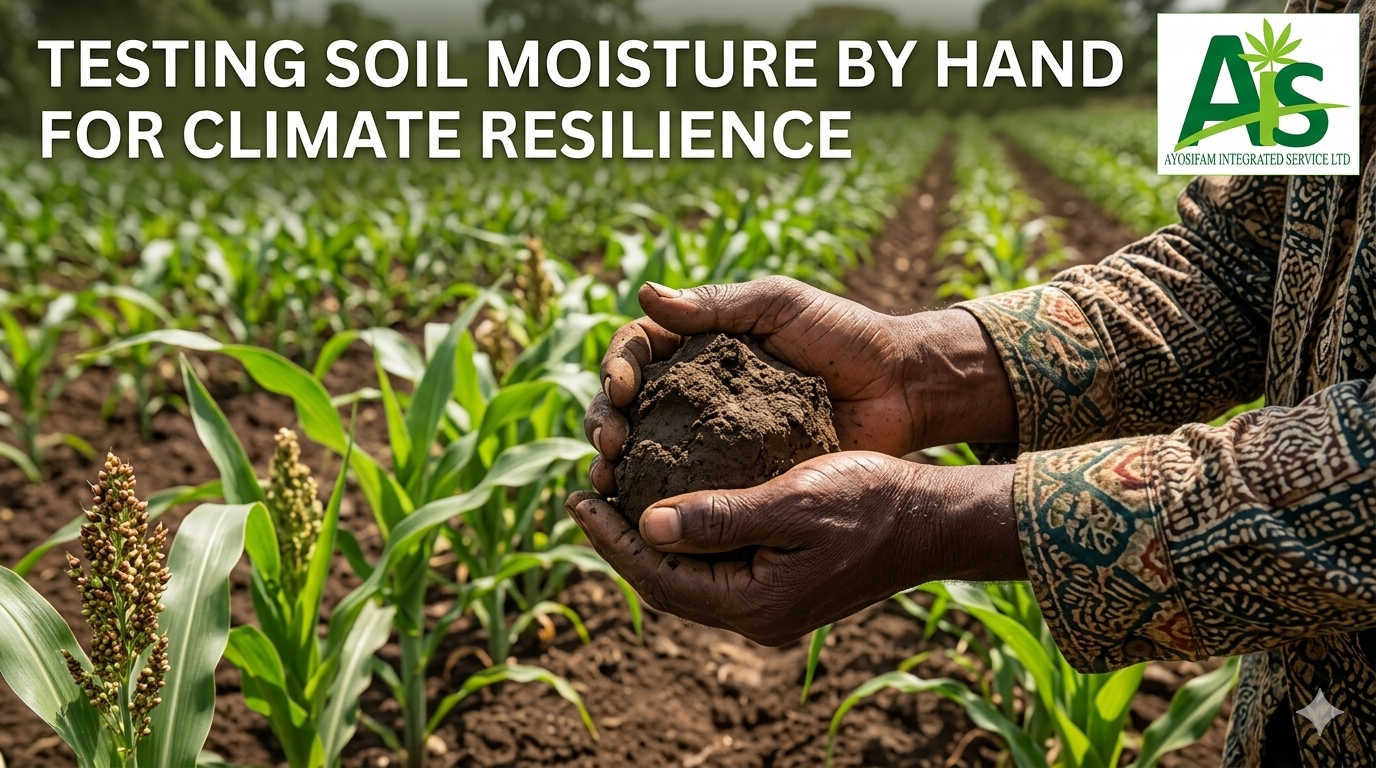
Before you commit your seeds to the ground, there is a simple, cost-effective, and ancient technique you can use to test your soil right now: The Hand-Molding Test.
Why Soil Moisture Matters Before Planting
Every crop has a specific moisture requirement to germinate and grow. Soil testing is no longer a luxury; because of climate change, it is a necessity for achieving a better yield.
When you plant in soil that is too dry, seeds wither. When you plant in soil that is waterlogged, seeds rot. Testing the soil with your own hands helps you read the earth accurately before making a financial commitment.
How Smallholder Farmers Can Test Soil Moisture by Hand (The Ribbon and Ball Test)
You don’t need expensive laboratory equipment to check if your soil is ready. Your palms are the best tools you have. Follow these simple steps:
Step 1: Dig a Little Deeper
Do not just scrape the topsoil, as the sun dries the surface quickly. Dig down about 15 to 30 centimeters (6 to 12 inches)—this is the root zone where your seeds will actually live. Scoop a handful of soil from this depth.
Step 2: Roll it into a Ball
Squeeze the soil firmly in your palm and try to mold it into a ball (a soil cake).
-
If it crumbles and won’t hold a shape: The soil is too dry. Even if it rained recently, the moisture hasn’t penetrated deeply enough. Planting now is risky; a short dry spell will kill your crops.
-
If it forms a firm ball that sticks together: The moisture level is good.
Step 3: The Thumb Ribbon Test (Checking Crop Suitability)
Once you have the ball, squeeze it upward between your thumb and forefinger to create a flat “ribbon” or flake.
-
For Grains (Sorghum, Maize, Millet): If the soil forms a loose ball but breaks apart easily when touched, it is perfect for grains. These crops prefer well-drained soils and will suffer if the earth holds too much water.
-
For Root Crops (Cassava, Potatoes): Cassava and sweet potatoes need loose, well-aerated soil to form healthy roots. If the soil molds into a hard, sticky clay ball that shines when squeezed, it holds too much water. Heavy, waterlogged clay will suffocate root crops and cause them to rot.
Step 4: Check for Excess Water
If you squeeze the soil and water actively drips out between your fingers, the soil is waterlogged. Wait a few days for the water to drain before planting, or your seeds will drown from a lack of oxygen.
The Golden Rule for the Rainy Season
Never let a single downpour fool you into rushing your planting. By taking a moment to put the soil in your hands, mold it, and feel its texture, you can accurately determine whether the earth is truly ready to protect your investment.
At Ayosifam Integrated Service Limited, we advocate for these smart, simple agronomic practices because climate resilience starts with understanding your land. When smallholder farmers minimize risks at the planting stage, we dramatically reduce crop failure and step closer to a food-secure future.
Have you tried the hand-molding test on your farm this season? Let us know what kind of soil you have in the comments below!


