
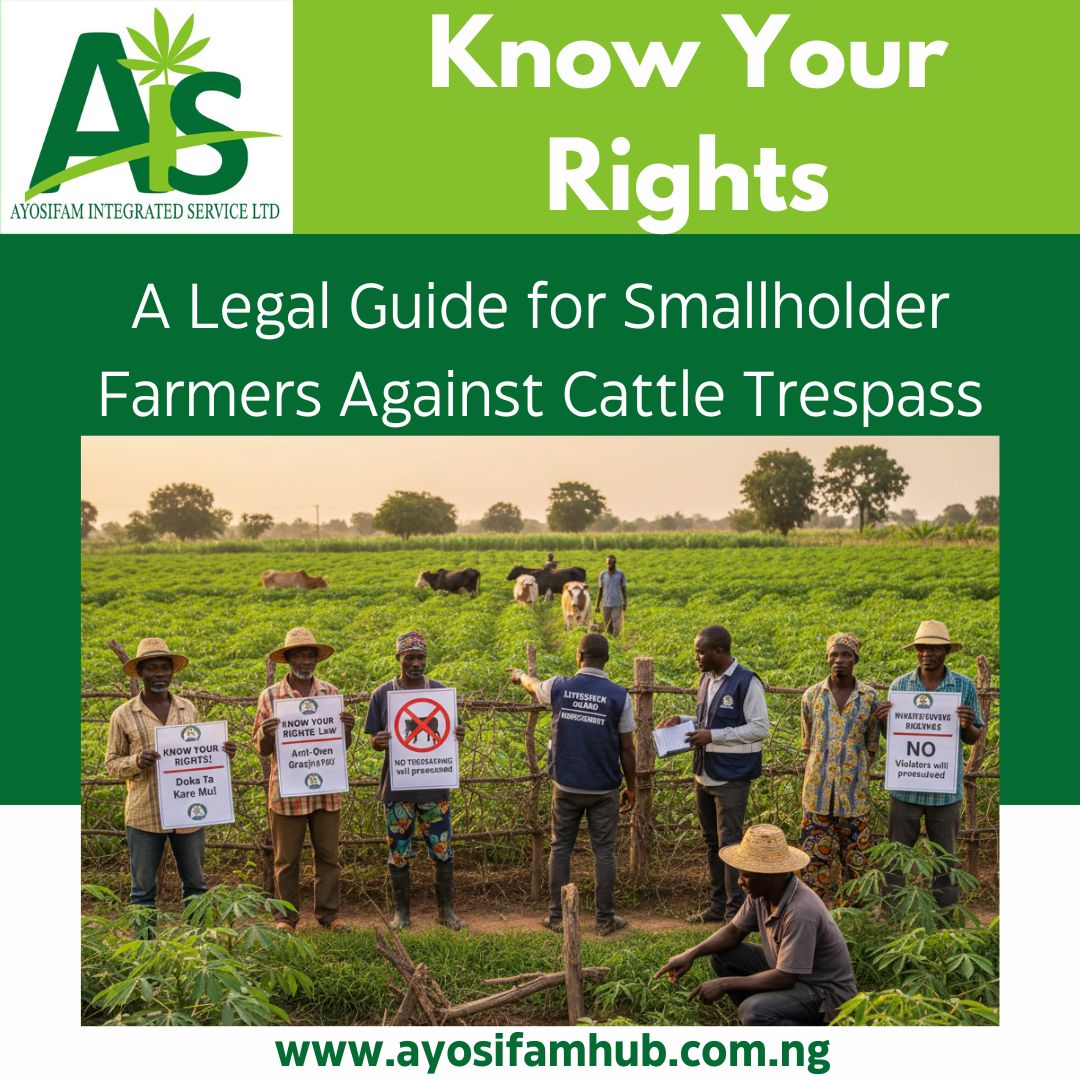
Welcome to AyosifamHub! As smallholder cassava and potato farmers, your hard work is the bedrock of our nation’s food security. With the recent push by the Federal Government and the existing Anti-Open Grazing Laws (AOGLs) in many states to end open grazing and transition to ranching, it is crucial that you understand your legal rights and how to protect your farm against cattle trespass.
It is important to note that while the Federal Government has called for an end to open grazing and a transition to ranching, the implementation of a nationwide ban is gradual, and actual bans are primarily enacted at the state level. Therefore, the specific law protecting you is the Anti-Open Grazing Law of your state (e.g., Benue, Taraba, Ekiti, Ondo, etc.).
Understanding the Law and Your Protection
The Anti-Open Grazing Laws in various states are designed to protect you, the crop farmer, by:
-
Prohibiting Open Grazing: The laws criminalize the act of pasturing livestock on open fields, public roads, or private farmlands.
-
Mandating Ranching: They mandate that all livestock (like cattle) must be confined to a legally designated and fenced ranch or a grazing reserve.
-
Imposing Liability for Damage: Critically, these laws stipulate that the owner of any livestock that trespasses and destroys crops must pay compensation or damages to the landowner/farmer. This transfers the financial burden of crop destruction onto the herder/owner.
-
Penalties for Violation: Violators of the anti-open grazing laws typically face fines, imprisonment, or both, depending on the severity of the offense and the specific state law.
Your Action Plan: How to Arm Yourself with the Law
Protecting your farm goes beyond fencing; it requires diligent record-keeping and knowing the right steps to take when a breach occurs.
1. Proactive Farm Protection
-
Know Your State’s Law: Research the specific provisions and penalties of the Anti-Open Grazing Law in your state and the name of the designated enforcement agency (e.g., Livestock Guard).
-
Fence and Mark Boundaries: Install clear boundaries and physical barriers (fences, hedges) as your first line of defence.
-
Build Community Networks: Establish a communication chain with neighbours and community leaders to report incidents swiftly as a united front.
2. Immediate Steps When Trespass Occurs
If you find livestock grazing on or destroying your cassava or potato farm:
-
Document Everything: Take clear photos/videos of the animals on your farm, the extent of the crop damage, and the herder responsible. Note the time, date, and location.
-
Secure Witnesses: Note the contact details of any neighbours who witnessed the incident.
-
Do NOT Engage in Violence: Prioritize safety and evidence collection. Avoid any physical confrontation.
-
Contact Authorities: Immediately report the incident to the designated Anti-Open Grazing Law Enforcement Agency or the nearest Police station.
3. Formal Legal Action for Compensation
The law provides for you to be compensated for your loss.
-
Lodge a Formal Complaint: Submit a written report to the enforcement agency detailing the incident, the evidence, and the estimated value of the damaged crops.
-
Claim Damages: You are entitled to compensation. Use an agricultural extension worker or local expert to officially assess and document the monetary value of the destroyed cassava and potato crops to verify your claim.
Our Hub’s Advice: The Path to Sustainable Farming
For the long term, the gradual transition to ranching means the legal environment is moving strongly in favour of crop farmers. By understanding and utilizing your state’s Anti-Open Grazing Law, you are not just defending your farm; you are helping to establish a sustainable framework for both crop and livestock production in Nigeria. AyosifamHub encourages you to stay informed, stay safe, and let the law be your shield!


